In a survey of 1,000 Americans, one message was clear: people expect 911 to be fast, accurate, and available, regardless of what is happening around them. A strong majority says they are willing to embrace new forms of technology if it helps first responders reach them sooner.
The findings reveal a growing reality about emergency communication in 2025. The public expects real-time accuracy, while outdated tools and uneven upgrades continue to hold back many 911 systems.
Key Findings:
- 95% of Americans would support 911 operators accessing their phone’s location data to find them faster.
- 56% of Americans believe the operator instantly knows their precise address or exact, real-time GPS location when they call 911 from their smartphone.
- 61% of Americans say if they waited 30 seconds or less on hold when calling 911, they would become extremely concerned.
- 84% are concerned about their ability to contact emergency services during a large-scale power outage or natural disaster that disrupts cellular networks.
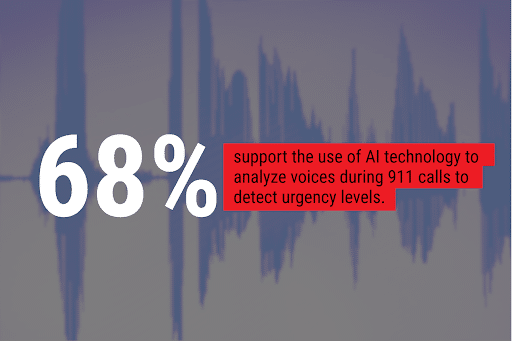
- 68% support the use of AI technology to analyze voices during 911 calls to detect urgency levels.
- 42% of Gen Zers oppose using AI to detect urgency in 911 calls despite 68% overall support
- 51% of parents with children under 18 would consent to smart home devices automatically contacting 911 if they’re incapacitated
In Times of Crisis, Trust Wins: 95% of Americans Support 911 Operators Accessing Their Phone Location
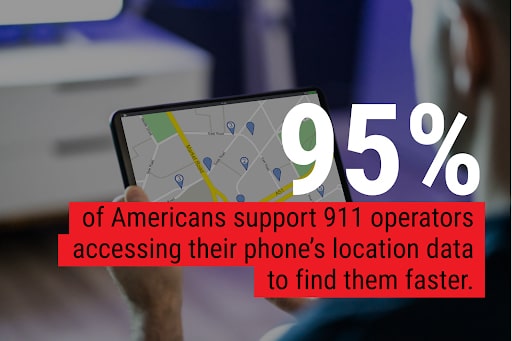
In our survey, 95% of Americans said they want 911 operators to access their phone’s location during an emergency. When a life is at risk, people place safety above privacy concerns.
Daily mobile habits shape this belief, with ride-share apps instantly finding people, delivery drivers pinpointing exact locations, and maps guiding users with ease. So the public sees location sharing with 911 as a natural extension of the technology they already use.
This expectation carries real weight. In many areas, more than 80% of emergency calls now come from mobile phones, which makes quick and accurate location data crucial.
Support for location access runs deep across different groups. Women show the strongest backing, with 74% saying they want responders to have their phone’s location. And expectations rise with income. Among households earning 150,000 dollars or more, more than half expect responders to arrive in six minutes or less.
Across the country, people are willing to set aside their privacy to help responders reach them more quickly.
Clearing Up the Call: Many Believe 911 Knows Exactly Where You Are, But There Is Room to Grow
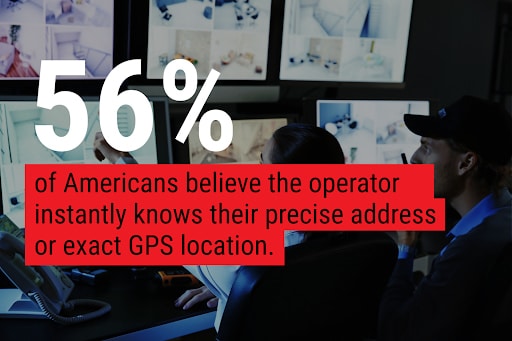
Our survey found that 56% of respondents believe 911 automatically receives a caller’s exact address or real-time GPS location when they dial from a smartphone. It is an understandable belief, shaped by polished consumer apps that deliver instant location services.
The reality behind the scenes is far less consistent. Location accuracy depends on many variables, including the device, the carrier, nearby towers, and the technology used by the local 911 center. A caller’s position might be accurate within a few feet, or it might be off by several hundred yards.
Upgrades across 911 centers vary widely due to funding limitations and older equipment that has not yet been replaced. Many centers still rely on slow or partially modernized systems. People assume 911 has access to the most advanced tools available. However, many agencies are still working within the constraints of software that is far older than the smartphones people carry every day.
This belief gap fuels frustration and highlights an urgent need for more consistent improvements across emergency communication systems.
Every Second Matters: Most Americans Feel a 30 Second Wait on 911 Is Too Long
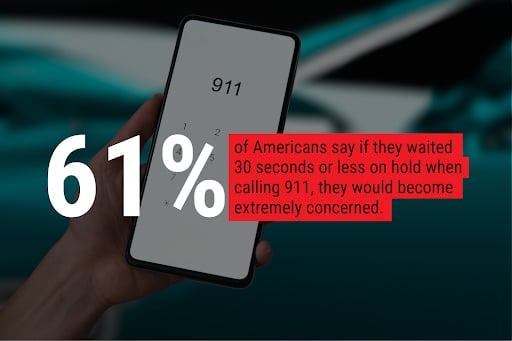
A fast answer can feel lifesaving, and Americans have little patience for anything that slows it down. In our study, 61% said they would feel deeply worried if they were placed on hold for 30 seconds or less. In a crisis, every moment seems to stretch. Fear heightens awareness, and even short delays can feel like the system is slipping out of reach.
Daily habits shape these expectations too. People are used to quick replies from chat support, instant updates from apps, and customer service lines that promise short wait times. When someone dials 911, they carry those same expectations with them.
Behind the scenes, dispatchers face pressure that callers never witness. Major incidents can trigger a flood of calls within minutes. Hang-ups must be handled through established procedures. Older software slows operators at the very moment people expect instant clarity. Staffing makes the job even harder, especially in smaller communities where one person may be juggling several tasks at once.
- The survey reflects how the public interprets these challenges.
- 38% believe most delays stem from not having enough staff.
- 35% of Gen Z say traffic and geography create the biggest slowdowns.
- Among households earning 150,000 dollars or more, 36% point to limited funding as the core problem.
While callers focus on their own crisis, dispatchers manage many at the same time. This gap between expectation and reality shapes how people judge emergency response long before help arrives.
Preparedness Matters: 84 Percent Worry About Reaching 911 During Major Disasters
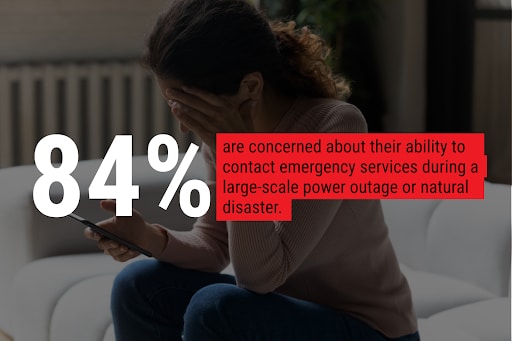
A significant 84% of Americans worry that they may not be able to reach 911 during a major disaster such as a wildfire, hurricane, prolonged outage, or large-scale storm.
This concern is grounded in lived experience. Many people remember times when cell towers went down, networks became overloaded, or power outages disrupted communication. With most households relying solely on mobile phones, losing that connection feels frightening.
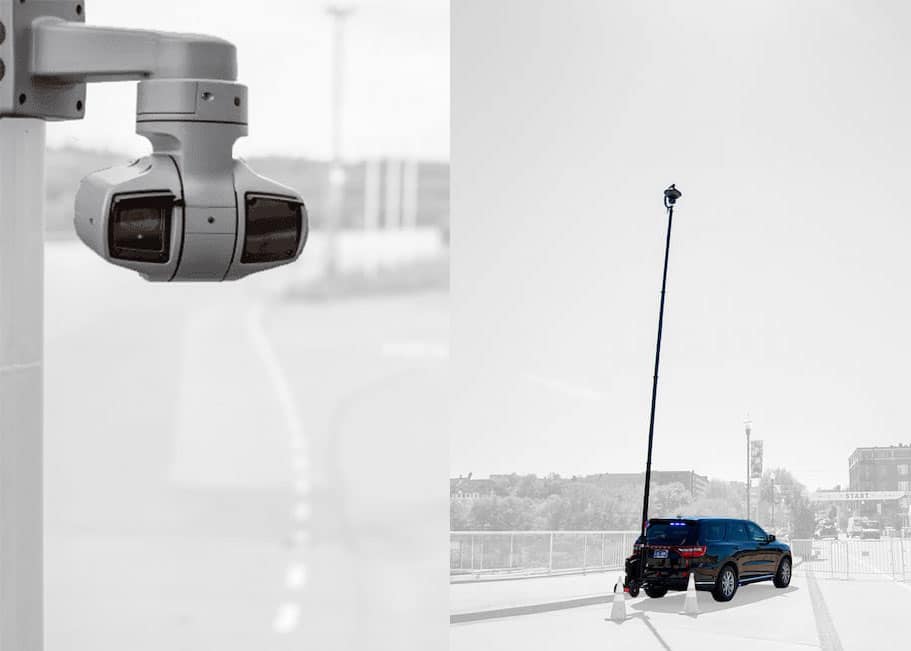
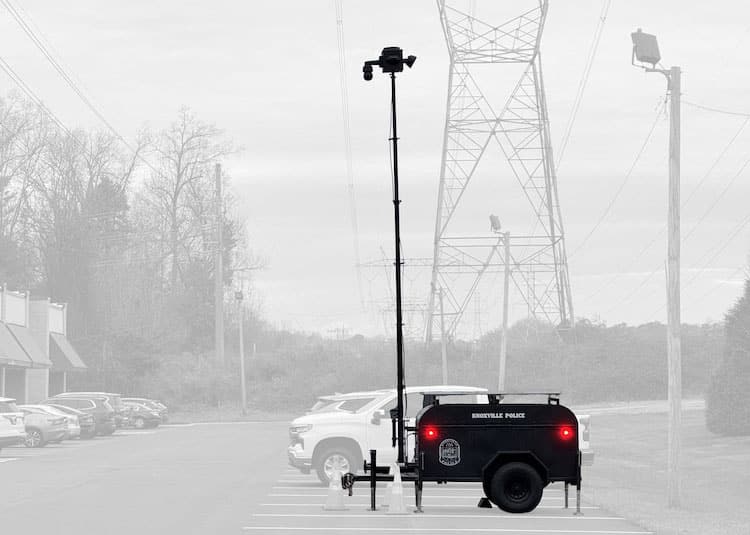
What callers may not realize is that emergency agencies often bring in equipment that holds up far better than commercial networks. During large incidents, responders may deploy mobile surveillance units and IP-based camera systems to regain visibility, create temporary communication points, or monitor rapidly changing conditions. These tools can help teams stay connected and aware even when consumer networks struggle to stay online. The public does not have access to those resources, which adds to the fear that once a phone signal disappears, help might be out of reach.
This concern shows up across groups. Nearly half of women worry most about losing cell service during an emergency, compared with one-third of men. That level of anxiety speaks to a simple truth: people expect 911 to be reachable no matter what, even when commercial networks fall short.
A Helping Hand from AI: Most Americans Support Tech That Detects Urgency in 911 Calls
Technology continues to reshape what people expect from emergency response.
In our survey, 68% of Americans say they support using AI to analyze voices during 911 calls to help identify the urgency of the situation.
The appeal is clear. During emergencies, callers may sound calm when they are not safe, or panicked when the situation is more controlled. People believe that AI could help dispatchers catch hidden cues or patterns that are difficult to interpret in real-time.
Stories about AI detecting health issues from audio have strengthened public confidence. Many people view AI as a tool that can help dispatchers prioritize calls more efficiently, particularly during periods of high call volume.
Even with strong public interest, experts agree that AI should support, not replace, human judgment. The technology often struggles with background noise, accents, trauma responses, or speech related to medical conditions.
AI can assist in assessing urgency during calls, but responders can still depend on tools like elevated camera systems or light towers in the field to get a clearer view of active scenes.
Mistakes in either direction can have serious consequences. People want faster support, but they also want it to be reliable and effective.
Younger Voices, Different Views: Gen Z More Cautious About AI in 911 Calls
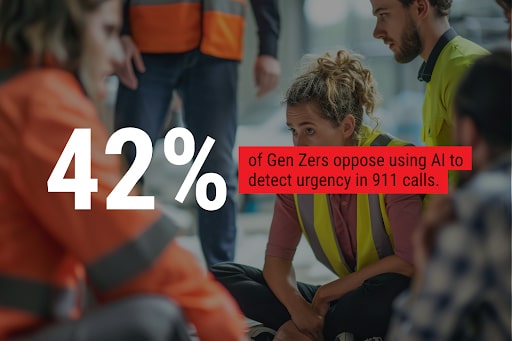
While most Americans support the use of AI in emergency calls, younger respondents stand out. Our study found that 42% of Gen Z oppose using AI to detect urgency.
Their caution reflects years of seeing automated systems misinterpret tone, surface inaccurate information, or mishandle context. They also grew up with widespread conversations about data privacy and algorithmic bias. This has made them more aware of how sensitive information moves through digital systems.
To many in this group, the idea of AI misreading their voice during a high-stakes moment feels risky. They may also place value on human connection during emergencies. Speaking to a person, not a machine, provides comfort and reassurance that automation cannot match.
This generational split shows a growing need for emergency technology that earns trust and is transparent about how data is used and interpreted.
Smart Homes, Safer Families: Over Half of Parents Support Emergency-Activated Devices
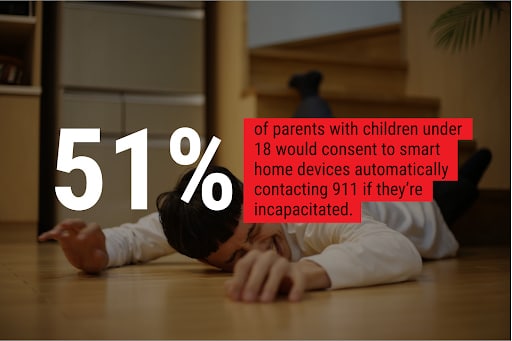
Parents show a strong willingness to use automation when it comes to protecting their families. Our survey found that 51% of parents with children under 18 would allow smart home devices to contact 911 automatically if the parent became incapacitated.
For many families, smart devices already play a role in daily safety routines. Parents are familiar with baby monitors, home cameras, wearable trackers, and similar tools. Automation feels like a backup plan, not surveillance, especially for households with younger children who may not know how to describe an emergency or dial 911.
First responders already receive automated calls from alarm systems and wearables. Smart home systems expand on that idea and could help responders gain a head start in critical situations where every moment matters.
Summary
Across every finding, one theme stands out. Americans want stronger, faster, and more reliable emergency communication. They expect technology and human expertise to work together in ways that bring help quickly, clearly, and without delays.
Their expectations often outpace the technology many agencies rely on, which makes upgrades and modernization increasingly important. From AI-supported 911 systems to smarter home devices and better location tools, the public is ready for progress.
When the unexpected happens, people want reassurance that help is within reach and that the communication systems guiding first responders can keep pace with modern life.
Methodology
To better understand how Americans view emergency communication, we surveyed 1,000 adults nationwide. Participants answered questions about their expectations for 911 response times, trust in location sharing, concerns during major outages, and opinions on emerging tools such as AI and smart home automation. Responses were reviewed across demographic groups, including age, gender, income, and parental status, to identify key trends and differences in attitudes toward emergency technology and preparedness.
Fair Use
Users are welcome to utilize the insights and findings from this study for noncommercial purposes, such as academic research, educational presentations, and personal reference. When referencing or citing this article, please ensure proper attribution to maintain the integrity of the research. Direct linking to this article is permissible, and access to the original source of information is encouraged.
For commercial use or publication purposes, including but not limited to media outlets, websites, and promotional materials, please contact the authors for permission and licensing details. We appreciate your respect for intellectual property rights and adherence to ethical citation practices. Thank you for your interest in our research.