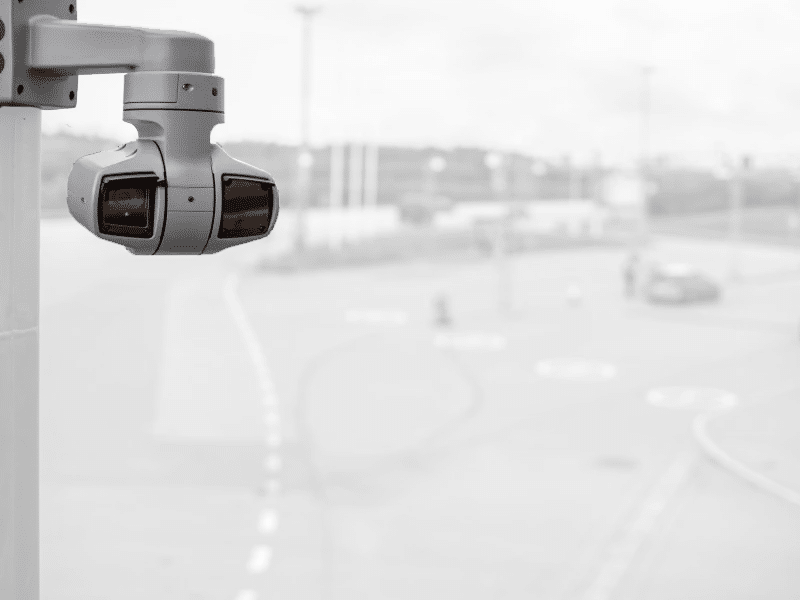
Security teams rarely operate in fixed conditions. A checkpoint may relocate within hours. A disaster scene may expand unexpectedly. A forward operating base may operate for months or only days.
Because of this, planners must carefully balance mobile surveillance and fixed cameras when designing perimeter security. Both systems play important roles, but they solve different operational challenges.
Fixed cameras provide stability and persistent monitoring, while mobile surveillance provides adaptability and rapid coverage expansion. The correct solution depends on the mission, terrain, and duration of operations.
The goal is not choosing one system over the other, but building coverage that aligns with real-world conditions.
Federal physical security guidance recommends layered protection, where multiple monitoring systems overlap so a threat can still be detected if one measure misses it. Major incident investigations have also shown responders can struggle to maintain situational awareness when communication and visibility are limited, according to the NIST World Trade Center investigation findings.
Understanding Mobile and Fixed Surveillance Systems
Fixed Cameras
Fixed camera infrastructure is permanently installed at a site and integrated into a central monitoring network. These systems commonly support:
- Base perimeter monitoring
- Entry control points
- Equipment yards
- Command facilities
They connect to established power and network lines and provide uninterrupted command center feeds. Their purpose is long-term deterrence and constant observation.
Mobile Surveillance Units
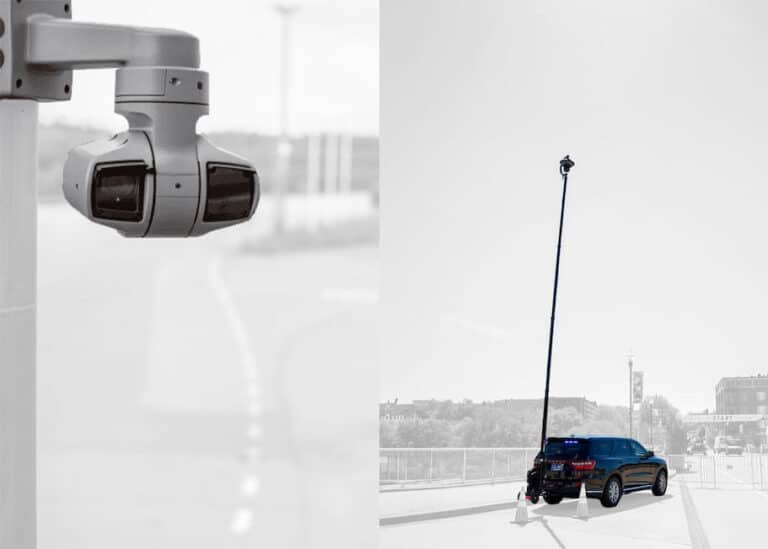
Mobile surveillance consists of deployable surveillance units mounted on trailers or portable towers. These systems form part of broader tactical surveillance systems used when security requirements change locations.
A typical mobile setup may include:
- Mobile surveillance towers or mobile surveillance trailers
- Telescopic masts
- Wireless communication links
- Self-contained power sources (battery, solar, or generator)
- LTE connectivity or radio transmission
Because the system carries its own power and connectivity, teams can establish monitoring in locations without infrastructure. Video feeds integrate into the command network just like fixed cameras, but the coverage area can be repositioned as the operation changes.
Understanding what qualifies as military-grade performance helps determine which system fits operational demands.
Key Differences Between Mobile and Fixed Surveillance
Deployment and Setup
Fixed cameras require installation work such as trenching, mounting hardware, wiring, and network integration. Deployment may take days or weeks depending on site conditions.
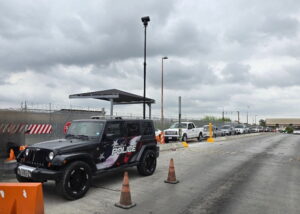
Mobile units operate as rapid-deploy systems. Personnel can position the trailer or tower, raise the mast, and begin monitoring within minutes. This allows security coverage to be established immediately in temporary or unpredictable environments.
Coverage and Flexibility
Fixed systems provide consistent monitoring of known locations like gates, fences, and parking areas.
Mobile surveillance lets teams adjust coverage as conditions change. Cameras can be moved between convoy routes, staging areas, and event perimeters without installing permanent infrastructure.
Power and Connectivity
Permanent systems rely on stable infrastructure such as grid power and wired networks.
Mobile surveillance can operate independently using:
- Solar charging
- Battery banks
- Portable generators
- Vehicle power
Data is transmitted back to command using:
- LTE connectivity
- Radio communication
Signal reliability improves when paired with antenna masts or telescopic masts that elevate transmitters and maintain communication links over distance. Elevated mounting solutions are especially important when selecting antenna masts and telescopic masts for military use, as terrain and operational distance directly affect transmission performance.
Maintenance and Durability
Both systems are built for harsh environments, but they are maintained differently.
Fixed cameras typically run continuously and may go long periods without attention, but servicing them often requires site access, lifts, or technicians, which can create downtime.
Mobile surveillance units are inspected between deployments and require minimal maintenance that can be performed on site, allowing teams to keep systems operational without waiting on infrastructure repairs.
When to Use Mobile Surveillance
Mobile surveillance is best when the operational environment changes frequently or infrastructure does not exist.
Typical uses include:
- Forward operating bases
- Disaster response staging areas
- Temporary checkpoints
- Convoy halts
- Special events and temporary public safety operations
Systems such as mobile surveillance towers and trailers, including The RATT, allow teams to establish situational awareness quickly and maintain visibility while operations move.
Mobile surveillance is often deployed alongside communication reinforcement solutions like BDAs, DAS, and portable towers, supporting reliable communication in areas without infrastructure.
Key advantages:
- Rapid deployment
- Mission flexibility
- Expandable coverage area
- Reduced infrastructure requirements
In unpredictable operations, speed and adaptability are often more valuable than permanence.
When to Use Fixed Cameras
Fixed cameras are designed for long-term perimeter security where locations remain constant.
Best suited for:
- Military installation perimeters
- Entry and exit gates
- Storage facilities
- Command structures
These military security cameras create a persistent deterrent presence while maintaining continuous monitoring and recording. Their reliability makes them ideal for safeguarding infrastructure and sensitive assets.
For stable sites, permanence improves security effectiveness.
Combining Mobile and Fixed Surveillance for Total Coverage
Most modern security plans rely on a combination of both systems.
This layered approach reflects how mobile video surveillance expands visibility beyond fixed infrastructure.
Examples include:
- Base cameras monitoring fencing
- Mobile surveillance trailers or towers cover surrounding terrain
- Telescopic masts or light towers extend camera field of view
- Remote feeds integrate into command center monitoring systems
Layered deployment improves situational awareness and strengthens threat detection because overlapping viewpoints eliminate blind spots.
Security planning is a balance between persistence and adaptability. Fixed systems monitor known risks continuously, while mobile systems monitor emerging risks. Operations that rely only on permanent cameras risk blind areas beyond the perimeter, while operations relying only on mobile units risk losing constant oversight. Effective security design uses both to cover predictable and unpredictable threats.
Choosing the Right System for Your Mission
Use the following framework when planning coverage.
1. Mission Duration
Short deployments benefit from systems that can be established quickly and removed without leaving infrastructure behind. Long-term locations, such as installations or secured facilities, justify permanent camera placement for continuous monitoring and recording.
2. Terrain and Mobility
If the security boundary shifts, surveillance must shift with it. Mobile units allow coverage to follow patrol routes, staging areas, or temporary perimeters. Fixed systems work best where boundaries remain defined and predictable.
3. Power Availability
Remote environments often lack dependable utilities, making self-powered surveillance necessary. Locations with established electrical service can support permanent networks with uninterrupted operation.
4. Coverage Priorities
Mobile surveillance expands visibility across large or uncertain areas. Fixed cameras focus on consistent observation of access points, gates, and controlled zones.
Security planning works best when equipment matches operational realities instead of forcing one system to handle every scenario. Planners evaluating surveillance coverage can explore available tactical solutions and gear to match operational requirements.
Conclusion
So which works best for military security, mobile surveillance or fixed cameras?
The answer depends on the mission requirements.
Fixed cameras are most effective for long-term perimeter security around established facilities. They provide continuous monitoring, strong deterrence, and dependable coverage of controlled access points.
Mobile surveillance works best when operations move or conditions change. Deployable systems extend visibility, support temporary operations, and establish monitoring where infrastructure does not exist.
Most operations require both. Fixed systems secure core areas, while mobile surveillance fills coverage gaps and adapts to evolving threats. When surveillance equipment is selected based on operational needs rather than convenience, teams gain better situational awareness, faster response capability, and more reliable protection.
If you are planning security coverage for a site or operation, our team can help determine the right balance of fixed and mobile systems for your environment. Surveillance systems remain one of several core technologies supporting modern operations. Contact us to discuss your requirements and build a surveillance strategy tailored to your mission.