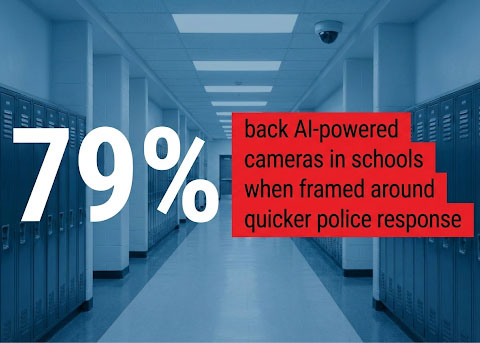

Facial recognition technology uses artificial intelligence (AI) to analyze distinctive facial features for identification or verification. Many agencies rely on facial recognition software to support daily monitoring and identification tasks. Law enforcement, military, first responders, and private security teams use the technology to maintain surveillance, ensure access control, or conduct investigations.
It offers significant advantages, but it also brings important challenges. These include ethical concerns of AI surveillance, false positives in surveillance, and other disadvantages of facial recognition.
For safety and security personnel in law enforcement, private security, military, and emergency management, understanding both the benefits and the risks is crucial. A balanced approach helps agencies decide how to use facial recognition responsibly.
What Is Facial Recognition Technology?
Facial recognition technology (FRT) is one of the most widely used forms of biometric identification in public safety and security today. FRT is a biometric tool that:
- Captures an image or video of a person’s face.
- Extracts facial feature data (eyes, nose, mouth or any other landmarks).
- Compares this data to a database of known faces for a match or identity verification.
Modern AI facial recognition systems use advanced algorithms to improve speed and accuracy. Over the past years, FRT has moved from lab-based experiments into real-world use for public safety, defense operations, and city infrastructure management. Its growing adoption reflects an operational need for faster decision-making, stronger access control, and enhanced surveillance capabilities in security environments.
It is also necessary to take into consideration the ethical concerns of AI surveillance, as well as both the advantages of facial recognition, and the disadvantages of facial recognition, such as accuracy issues, cybersecurity risks, and public perception.
The Pros of Facial Recognition Technology
There are several key ways in which facial recognition can help agencies. It can be used to support public safety, strengthen defense operations, improve city services, and bring more accuracy to large-scale identification tasks.
Strengthening Public Safety
Facial recognition technology helps public safety teams respond faster during daily operations. Police can use it to identify suspects seen on security cameras or mobile surveillance systems, a method highlighted in our police patrol security camera strategies guide.
It also helps in finding missing people by comparing faces in real time with known databases When connected to video monitoring tools, such as mobile surveillance towers or light towers, the technology becomes part of a stronger security system.
Facial recognition speeds up identification and saves time that would otherwise have been spent by officers manually reviewing images. It also aids collaboration among local, state, and federal agencies.
Public safety benefits include:
- Quick identification of suspects
- Faster searches for missing individuals
- Better coordination among agencies
This has given agencies great benefits to manage day-to-day operations more efficiently and prepare against sudden incidents.
Enhancing Military and Defense Operations
Some military bases use facial recognition technology to secure high-security areas. Biometric checks ensure that only approved personnel are able to access the most restricted areas. These checks strengthen biometric security across restricted zones and sensitive entry points.
In field operations, portable devices and body-worn systems allow teams to verify identities quickly. Reliable communication tools, such as antenna masts, help to keep the technology stable during missions.
Facial recognition also works well for large groups. It supports troop movements, checkpoints, and fast identity checks during high-pressure situations.
Supporting City Operations and First Responders
Cities use facial recognition to monitor traffic, manage crowds, and support large events. When built into smart-city systems, it helps identify threats faster and improves overall awareness.
First responders also benefit from rapid identity checks in emergency situations. This technology can also provide confirmation of who requires aid, who belongs in a restricted area, or who could pose a risk.
Mobile surveillance towers provide teams with an elevated view of an area. When combined with facial recognition, they assist the first responders in viewing more and making quicker decisions during high-stress incidents.
Improving Efficiency and Accuracy
Facial recognition technology reduces human error by automating parts of the identification process. This helps agencies that manage large spaces or big crowds, such as airports and stadiums.
As camera quality and AI models improve, the technology becomes faster and more accurate. This helps reduce false leads and gives agencies more reliable information.
Where efficiency does improve most:
- Airports and transit hubs
- Large event centers and stadiums
- Military checkpoints and secure facilities
These enhancements help agencies work more effectively in dynamic environments where every second counts.
The Cons of Facial Recognition Technology
While the advantages are strong, security leaders need to carefully weigh the risks and challenges.
Privacy and Ethical Concerns
Widespread use of facial recognition technology deeply implicates issues of privacy and civil-liberty concerns. Most people do not know when their face is being scanned or stored, creating questions about consent and the use of the data by agencies.
These concerns grow when agencies do not have clear rules or oversight. Without strong policies in place, communities may fear constant monitoring or unfair surveillance methods.
The ethical concerns of AI surveillance also include the risk of discrimination or unequal impacts on vulnerable groups. These concerns provide evidence of why agencies should establish appropriate safeguards prior to any deployment of this technology. The planning guidance in a system security plan can support this preparedness.
Accuracy Challenges and False Positives in Surveillance
Poor conditions can decrease facial recognition accuracy. Low lighting, strong angles, masks, hats, or low-resolution images can easily lead to errors. These challenges increase the risk of false positives or false negatives.
Some older studies found demographic bias in certain systems. More recent research shows improvement, but accuracy still depends on the environment, the camera, and the quality of the algorithm. Hardware quality, such as the features outlined in choosing the right portable security camera, can influence the performance.
A false positive in a police or military operation can lead to serious consequences. Agencies should therefore review the matches through trained personnel, instead of solely depending on the automated result.
Cybersecurity Risks
Biometric databases involve highly sensitive information. If cybercriminals gain access, this data cannot be changed or reset like a password. Facial recognition systems therefore become major targets for attacks.
A breach could allow identity theft, spoofing, or unauthorized surveillance of the affected people. Agencies need to protect the whole system, including cameras, networks, storage servers, and access controls. Weakness in any one of these areas exposes the full operation.
Public Perception and Adoption Barriers
Public trust heavily influences whether agencies can adopt facial recognition technology. Many citizens fear misuse, unfair targeting, or unclear rules. The fear of misuse, unfair targeting, and lack of clarity on rules among citizens ultimately supports pushback, lawsuits, or strict policy limits.
The Pew Research Center conducted a national study of public views of police using facial recognition technology. In that report, only 27% of Americans said it would be a bad idea, but those concerns still shape how communities respond to new systems.
To address this, agencies should be transparent, explain the goals of such initiatives, and engage the community when possible. Clear communication about how the technology works and how the data is protected can help build confidence and support responsible use.
Balancing the Pros and Cons
For leaders in military, law enforcement, security, and first-responder roles, the decision to deploy facial recognition technology must be made thoughtfully. Consider the following steps:
- Define clear operational goals: Why is FRT being deployed? Is it to identify suspects, manage access control, or enhance event security?
- Align capabilities to mission: Match the right hardware (cameras, sensors, lighting), network infrastructure (mobile towers, antenna masts), and analytics engine to the environment.
- Implement strong policies and oversight: Document rules of use, retention schedules, audit logs, access controls, and mechanisms to address errors or bias.
- Ensure training and human review: Operators must understand limitations, avoid over-reliance on algorithm output, and treat FRT as a lead – not the sole evidence.
- Secure the biometric data lifecycle: From capture to database to access and deletion, every step must be protected against intrusion or misuse.
- Engage the public and build trust: Especially in civilian settings and smart-city applications, transparent communication helps reduce resistance.
- Monitor and evaluate performance regularly: Track false positives, false negatives, system uptime, and demographic impacts to refine practices.
By following these steps, agencies can gain the value of facial recognition technology while minimizing the ethical risks of AI-based surveillance, the potential for false positives from the surveillance, and the disadvantages of facial recognition that could compromise accuracy, legality, or community trust.
Future Outlook in Facial Recognition Technology
Facial recognition technology is rapidly changing, and agencies should expect great improvements in the next few years. These will define how the technology is used by public safety teams, military units, and city leaders in daily operations.
Deep-learning and neural-network models are continuously being refined. Artificial intelligence in security continues to advance, giving agencies better tools for accurate real-time identification. These systems enable facial recognition to perform much better under extreme conditions, such as low lighting or crowded environments. As the algorithms advance, so does accuracy and speed.
Integration with other tools is also growing. Body-worn cameras, drones, mobile surveillance towers, antenna masts, and IoT sensors can all work with facial recognition to extend coverage and support real-time decision-making.
More organizations will use facial recognition during large events, in transit hubs, and across smart-city networks. As adoption grows, oversight and strong policies will become even more crucial to guide how the technology is used.
The level of public and regulatory scrutiny will further increase. So, concerns about privacy, fairness, and data protection will continue to shape laws and industry standards around the use of analytics.
Overall, agencies that are successful will balance innovation with strong safeguards. Facial recognition works best when it is part of a complete security strategy that includes clear policies, training, and accountability.
Conclusion
Facial recognition technology provides critical benefits to security leaders. It can speed up identification, strengthen access control, expand surveillance coverage, and improve situational awareness. For military, law enforcement, private security, and first responders, these benefits can support safer and more efficient operations.
At the same time, technology brings challenges that must be taken seriously. Privacy concerns, accuracy issues, cybersecurity risks, and public perception all shape how facial recognition is used. Agencies that want to adopt it responsibly need clear policies, strong training, and transparent communication with the communities they serve.
By understanding both the advantages and disadvantages of facial recognition technology, leaders can make informed decisions that balance readiness with accountability. The goal is to use the technology in a way that supports safety while respecting civil rights and maintaining public trust.
Contact us to learn how our technologies can support your agency’s surveillance goals and help you build a modern, layered security strategy.