
Military and security operations depend on equipment that performs reliably in difficult conditions. Personnel often operate in extreme heat, freezing temperatures, heavy rain, dust, and unstable terrain.
Equipment failure in these environments can disrupt communication, reduce visibility, or create serious safety risks.
This is why defense organizations rely on military-grade equipment. These systems are built for operational endurance, rapid deployment, and reliability under stress.
But what is military-grade equipment, and what types of gear do military forces and public safety agencies rely on most?
Modern defense operations depend on a wide range of tactical equipment designed to support surveillance, communication, mobility, and safety:
- Surveillance and reconnaissance systems
- Communication and signal equipment
- Military vehicles and mobility systems
- Protective and personal equipment
- Weapon and defense systems
- Lighting and power solutions
Each category plays a different role in maintaining operational readiness. Together, they help teams monitor environments, coordinate missions, and operate safely in complex situations.
What Does “Military-Grade Equipment” Mean?
The phrase military-grade equipment refers to technology and tools designed to meet strict durability and performance standards.
These systems are built to withstand demanding environments while maintaining consistent performance.
Many defense systems follow MIL-SPEC testing standards, which evaluate how equipment performs under extreme conditions such as:
- Temperature fluctuations
- Vibration and shock
- Moisture and dust exposure
- Corrosion and salt fog
- Electrical interference
This level of testing ensures systems remain functional during real-world operations.
Military-grade gear typically includes features such as:
- Rugged design and reinforced materials
- Weatherproof construction
- Rapid deployment capabilities
- Secure communication protocols
- Long operational lifespans
Unlike commercial equipment, these systems are designed for continuous field use and mobility.
For example, mobile surveillance platforms and communications systems must operate reliably in remote environments where repairs and replacements are not immediately available.
Many surveillance platforms are built to meet these durability requirements. Military-grade systems must maintain consistent performance in harsh field environments where repairs and replacements may not be immediately available.
Reliability matters. According to the U.S. Government Accountability Office, military readiness ratings measure whether units have the equipment, personnel, and resources needed to accomplish their assigned missions. Maintaining reliable systems helps prevent communication failures and operational delays that can affect mission performance.
The following sections break down the six major equipment categories used in modern defense operations.
The Six Types of Equipment the Military Uses
Surveillance and Reconnaissance Systems
Surveillance systems help military and security teams monitor environments, detect threats, and gather intelligence.
They provide real-time visibility across large areas and improve situational awareness during operations.
Common examples include:
- Mobile surveillance towers
- Rapid deployment camera systems
- Fixed perimeter monitoring cameras
- Thermal imaging systems
- Motion detection sensors
Modern military surveillance systems often combine several technologies to provide full coverage of operational areas.
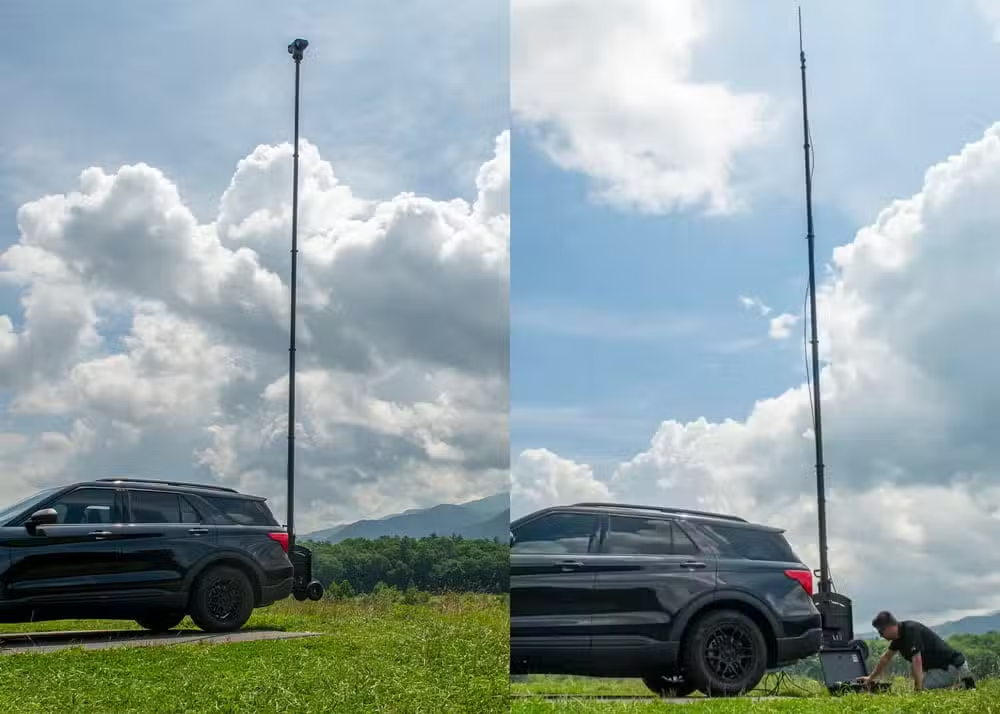
For example, mobile surveillance trailers can deploy elevated cameras, lights, and sensors that monitor large areas during temporary operations or emergency response deployments.
The RATT (Rapid All-Terrain Tower) is another example of rapidly deployable monitoring technology designed for remote or high-risk environments.
These platforms often include:
- Night vision capabilities
- Thermal imaging cameras
- Long-range optical zoom
- Motion-triggered alerts
- Remote monitoring capabilities
These systems allow operators to monitor environments without placing personnel in unnecessary danger.
Different monitoring strategies are used depending on mission requirements. Mobile and fixed military surveillance systems are often deployed together to provide both rapid coverage and persistent monitoring.
Surveillance technology plays a major role in national security. According to the U.S. Department of Homeland Security, monitoring and physical security systems help organizations detect threats and protect critical infrastructure across the United States.
Communication and Signal Equipment
Communication systems connect personnel, vehicles, command centers, and surveillance equipment during operations.
Without reliable communication, teams may struggle to coordinate movements, share intelligence, or respond quickly to changing situations.
Modern military communication systems rely on multiple technologies working together, including:
- Tactical radios
- Satellite communication systems
- Secure command networks
- Data transmission platforms
- Antenna masts and signal towers
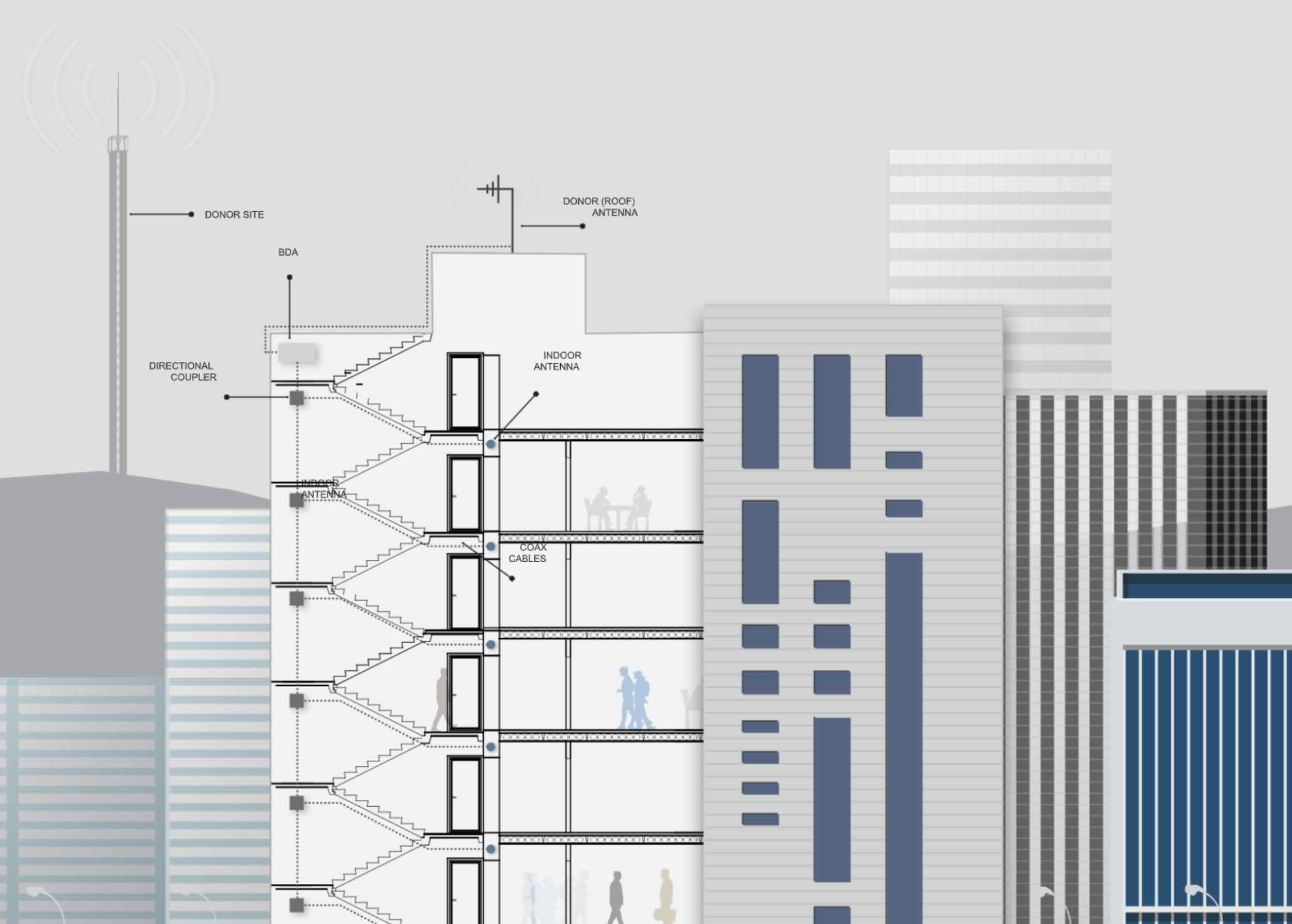
Systems such as antenna masts and telescopic masts elevate communication equipment to improve signal range and reliability. These elevated systems allow forces to maintain tactical connectivity even in mountainous terrain or remote locations where signals may otherwise be blocked.
Military communication gear also prioritizes security and interoperability. Many systems use encrypted networks to protect sensitive information while ensuring units from different agencies or allied forces can communicate seamlessly during joint operations. This combination of secure communication, signal elevation, and system compatibility helps maintain coordination during complex missions.
Antenna and telescopic mast systems play a key role in maintaining reliable field communications. These types of communication and signal equipment used in modern forces help extend signal range and support connectivity in remote or obstructed environments.
Military Vehicles and Mobility Systems
Mobility is essential for military and emergency operations. Personnel must be able to move quickly across difficult terrain while transporting equipment, supplies, and personnel.
Military vehicles are designed to support these mobility requirements.
Common types of military vehicles include:
- Armored transport vehicles
- Tactical utility vehicles
- Logistics transport trucks
- Off-road reconnaissance vehicles
- Amphibious transport systems
These vehicles are built with durability and operational endurance in mind.
Features often include:
- Off-road suspension systems
- Reinforced frames
- High payload capacity
- Advanced navigation systems
- Environmental protection systems
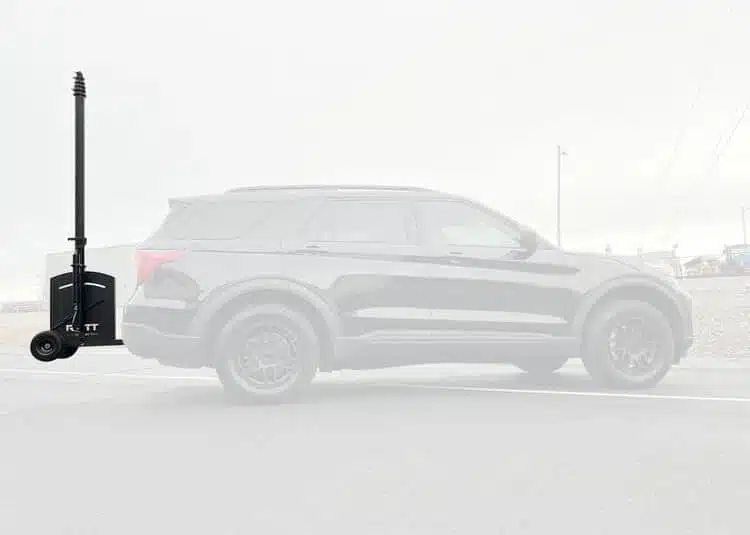
Many tactical systems, including surveillance platforms and communication equipment, are mounted directly on vehicles to support rapid deployment. For example, mobile surveillance systems can be transported and deployed alongside vehicles during temporary operations, disaster response missions, or forward operating base setups.
The RATT mobile surveillance tower supports this type of flexibility, with field-swappable mounting options that allow it to be deployed on a wall, tripod, or vehicle hitch depending on operational needs. This modular approach allows teams to reposition surveillance equipment quickly while maintaining stability and visibility in changing environments.
Protective and Personal Equipment
Personnel safety remains one of the highest priorities in military and security operations. Protective gear helps reduce injury risk and improve survivability in dangerous environments.
Common protective military equipment includes:
- Protective body armor
- Ballistic helmets
- Tactical gloves and protective clothing
- Eye and hearing protection
- Respiratory protection systems
Modern protective gear often uses advanced materials such as ballistic-grade fibers and impact-resistant composites to protect personnel while maintaining mobility and comfort during extended missions. Many systems are also designed to integrate with communication equipment and situational awareness tools, allowing personnel to stay connected and informed while operating in demanding environments.
Examples include:
- Helmet-mounted communication systems
- Heads-up display technology
- Integrated body sensors
- GPS tracking devices
This integration allows personnel to maintain communication and situational awareness while remaining protected.
According to defense research from the Center for a New American Security, modern body armor has dramatically improved survivability for soldiers in recent conflicts.
Weapon and Defense Systems
Weapon and defense systems are designed to protect personnel, defend territory, and deter threats. These systems vary widely depending on mission requirements and operational environments.
Examples include:
- Precision targeting systems
- Missile defense systems
- Naval defense platforms
- Ground-based defense systems
- Electronic defense technologies
These systems rely heavily on surveillance platforms and secure communication systems to operate effectively.
For example:
- Surveillance systems detect potential threats
- Communication systems relay targeting data
- Command networks coordinate responses
Without reliable monitoring and communication infrastructure, many defense systems cannot function effectively.
This is why defense organizations often focus on supporting technologies such as communications, surveillance, and power systems when developing modern military infrastructure.
Lighting and Power Solutions
Military operations often occur in environments with limited access to electricity or infrastructure. This makes field lighting and power solutions essential for maintaining operational readiness.
Common systems include:
- Portable generators
- Hybrid power systems
- Solar-powered field units
- Battery storage systems
- LED light towers
These systems support critical operations such as:
- Nighttime construction or logistics operations
- Disaster response missions
- Security perimeter monitoring
- Emergency medical response
- Temporary command centers
LED light towers provide powerful illumination while using less energy than traditional halogen lighting systems.

Modern light towers often include features such as:
- Telescopic masts
- Energy-efficient LED lighting
- Portable generator integration
- Rapid deployment capabilities
These types of field lighting solutions allow personnel to maintain visibility and operational safety during nighttime missions.
Modern field operations rely on dependable lighting and energy systems in military-grade gear that can operate in remote environments where permanent infrastructure may not exist. Portable power units, generators, and deployable light towers help maintain visibility and operational safety during nighttime missions.
These types of lighting and power solutions used across military operations support logistics work, security monitoring, disaster response, and temporary command posts by providing consistent illumination and reliable power in changing conditions.
How Military-Grade Equipment Works Together
Military operations rarely rely on a single piece of equipment. Instead, multiple systems work together to support mission success.
For example:
- Surveillance systems provide situational awareness
- Communication systems transmit data to command centers
- Lighting systems support nighttime operations
- Vehicles transport equipment and personnel
- Protective gear protects individuals in the field
This integrated approach allows teams to maintain visibility, coordination, and operational control.
Interoperability is a key part of modern defense technology. Systems must work together across multiple platforms and agencies.
For example:
- Surveillance cameras may transmit data through communication networks
- Lighting systems support vehicle operations at night
- Command networks coordinate equipment across large operational areas
This system integration helps teams respond faster and operate more effectively in complex environments.
Organizations that deploy tactical solutions and gear designed for interoperability can improve mission adaptability and operational safety.
Conclusion
Military and security operations depend on equipment that performs reliably under pressure. Understanding what is military grade equipment helps explain why these systems are designed differently than commercial technology.
Modern operations rely on six major categories of equipment:
- Surveillance and reconnaissance systems
- Communication and signal equipment
- Military vehicles and mobility systems
- Protective and personal equipment
- Weapon and defense systems
- Lighting and power solutions
Each category supports mission readiness, safety, and coordination. Together, these systems create the infrastructure needed for modern defense and public safety operations.
Whether supporting surveillance, communications, or field lighting, military-grade systems are built to deliver durability, reliability, and mission adaptability in demanding environments.
If you’re looking to enhance your operational capabilities with reliable military-grade equipment, our specialists at Critical Tech Solutions are ready to assist. Contact us today to find the best solutions for your mission needs!
Frequently Asked Questions About Military-Grade Equipment
What is military-grade equipment?
Military-grade equipment consists of tools and systems built to meet strict standards of durability, performance, and reliability. Designed for extreme weather, remote terrains, and high-risk areas, these systems undergo extensive testing to ensure consistent performance under stress.
What types of equipment does the military use?
Modern military operations rely on several major categories of equipment, including:
- Surveillance and reconnaissance systems
- Military communication systems
- Military vehicles and mobility systems
- Protective gear and personal equipment
- Weapon and defense systems
- Field lighting solutions and power systems
Each category plays an important role in maintaining mission readiness and operational safety.
What makes military-grade equipment different from commercial equipment?
Military-grade equipment is designed for reliability in extreme conditions. Unlike most commercial products, these systems are built to withstand vibration, temperature changes, dust, moisture, and heavy use. Many military systems also include features such as encrypted communication, rugged construction, and modular components that allow rapid deployment and field repairs.
Why are surveillance systems important for military operations?
Surveillance systems help military and security personnel monitor environments, detect potential threats, and gather intelligence. Technologies such as mobile surveillance towers, thermal cameras, and remote monitoring platforms improve situational awareness and allow teams to observe large areas without placing personnel at unnecessary risk.
Why are field lighting systems used in military operations?
Field lighting solutions provide illumination for nighttime operations and remote deployments where permanent power infrastructure may not exist. Portable light towers, generators, and hybrid power systems help support logistics work, emergency response, security monitoring, and temporary command centers.
Where can organizations request military-grade surveillance or tactical equipment?
Organizations that need deployable surveillance systems, communication infrastructure, or field lighting solutions can contact Critical Tech Solutions to discuss operational requirements and equipment options. Their team works with defense, security, and emergency management organizations to help identify the right configuration for each mission.