
Military operations, public safety missions, and emergency response deployments rarely happen in ideal conditions. Teams work in extreme heat, freezing temperatures, heavy rain, dust, and unstable terrain. There is no margin for equipment failure in these environments.
That is where military surveillance equipment stands apart.
In this context, surveillance equipment includes:
- Cameras and imaging sensors
- Telescopic towers and antenna masts
- Mobile surveillance units, including rapid-deploy trailers and vehicle-mounted systems
- Tactical communication links
Unlike consumer security systems, defense-grade equipment is built for combat zones, disaster areas, and high-risk tactical operations.
Whether a system is mobile or fixed, the configuration must align with terrain, threat level, and operational objectives.
Now let’s break down what truly makes a system military-grade.
What Does “Military-Grade” Really Mean?
The term military-grade is often overused in marketing. In real-world defense and public safety operations, it has a clear meaning.
Military hardware must withstand:
- Continuous vibration during transport
- Shock from rough terrain or impact
- Moisture, dust, and sand intrusion
- Corrosion from salt air or humidity
- Long deployment cycles without maintenance
In military terms, rugged means surviving sandstorms, salt air, and 24-hour deployment cycles, not just passing lab tests.
Many systems meet defined environmental standards. For example:
- IP ratings measure resistance to water and dust
- Reinforced casing improves impact tolerance
- Shock resistance protects internal electronics during transport
True rugged surveillance gear and defense-grade equipment are engineered for survival in the field, not just showroom performance.
Core Features That Define Military Surveillance Equipment
Military surveillance systems succeed because they combine durability, mobility, power resilience, and secure communications. Each feature supports mission continuity when conditions become unpredictable.
Durability and Weatherproofing
Surveillance systems deployed at a forward operating base or along a convoy route face constant environmental stress.
Key durability features include:
- Reinforced or sealed housing
- Weatherproof enclosures with high IP ratings
- Corrosion protection for coastal or humid regions
- Vibration-resistant mounts
- Shock-resistant internal components
This is what defines field-ready technology. Equipment must remain operational during transport and throughout deployment.
Commercial cameras may function in a parking lot. Military systems must operate in blowing sand, heavy rain, or freezing conditions without performance failure.
Night Vision and Imaging Capability
Visibility is rarely ideal during tactical operations.
Military surveillance equipment uses advanced imaging tools such as:
- Night vision sensors
- Infrared imaging
- Thermal imaging cameras
- HD zoom optics
- 360-degree coverage platforms
Thermal imaging detects heat signatures. Infrared systems operate in low-light or zero-light environments. High-powered optics allow long-range monitoring across wide perimeters.
This capability is essential for tactical surveillance systems operating during nighttime perimeter defense or covert monitoring.
Low-light capability is critical. An analysis of police incident data found that violent crimes such as murder and robbery occur more frequently at night than during daytime hours, reinforcing the need for effective surveillance after dark. This makes advanced night vision and infrared tools especially important for military, law enforcement, and perimeter defense operations.
Secure Power and Communication Links
Continuous monitoring requires reliable power and secure data transmission.
Military systems often use:
- Hybrid power systems such as battery, generator, and solar
- Generator-ready configurations
- Redundant power inputs
- LTE or 5G communication links
- Encrypted feeds
- Secure data transmission
When deployed in remote areas, systems must maintain signal strength and encrypted connectivity.
Equipment often integrates with:
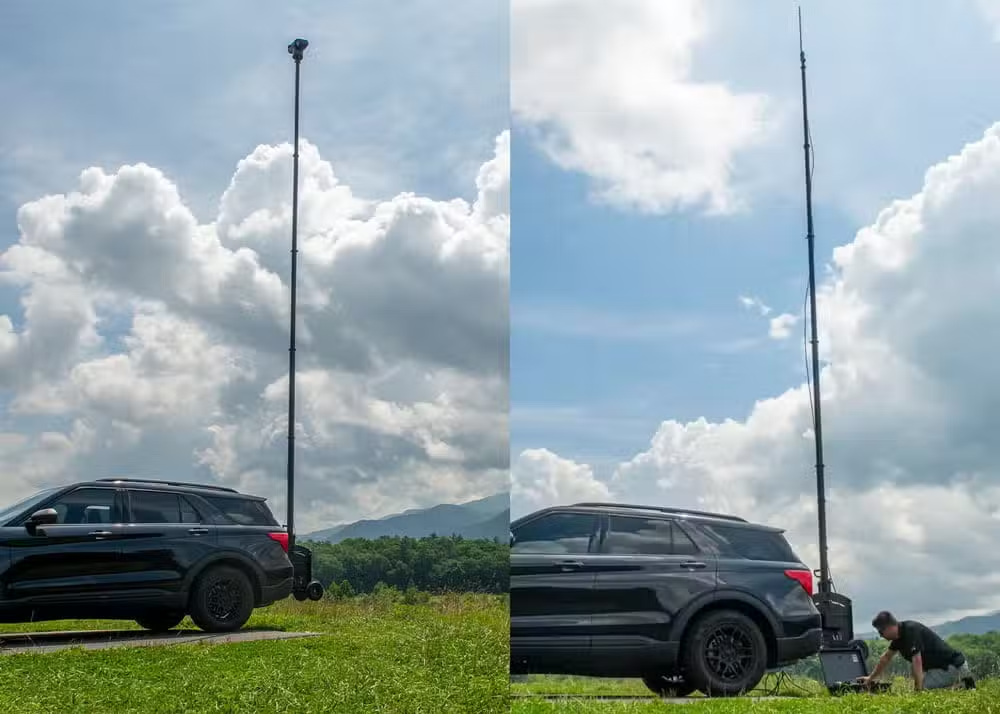
These masts elevate antennas, cameras, lights, and more to improve coverage and maintain communication stability.
For military and emergency management teams, open commercial networks are not secure enough. Secure network integration protects operational intelligence and prevents interception.
Mobility and Rapid Deployment
Speed matters in tactical operations.
Military units and emergency response teams cannot wait days to install infrastructure. Systems must deploy within minutes or hours.
Modern mobile surveillance units can include:
- Mobile surveillance trailers
- Mobile surveillance towers
- Telescopic mast platforms and portable towers
- Integrated LED light towers
For example, systems like The RATT combine elevated camera positioning and rapid deployment in a single field-ready platform.
Mobility allows teams to reposition assets during evolving threats or disaster response operations, especially when using masts that elevate or stabilize surveillance payloads to extend visibility and communication range.
Military vs. Commercial Surveillance Equipment
The differences between military surveillance equipment and commercial systems are significant.
| Feature | Military-Grade | Commercial-Grade |
|---|---|---|
| Durability | Impact and weather-resistant | Limited protection |
| Imaging | Thermal, infrared, HD zoom | Standard HD |
| Power | Hybrid and generator-ready | Standard power |
| Mobility | Deployable trailers, towers and masts | Fixed installations |
| Integration | Secure, encrypted systems | Open commercial networks |
Military and public safety personnel cannot rely on off-the-shelf cameras designed for retail stores or office buildings. These systems are not built for unstable environments, disrupted infrastructure, or secure tactical communication.
During disaster response events and large-scale emergencies, interoperable communication is essential to coordinate responders and support effective operations. FEMA’s disaster emergency communications efforts focus on ensuring interoperability among federal, state, tribal, and local partners, while government reviews have found that reliable emergency communications capabilities are a critical part of emergency response planning and execution.
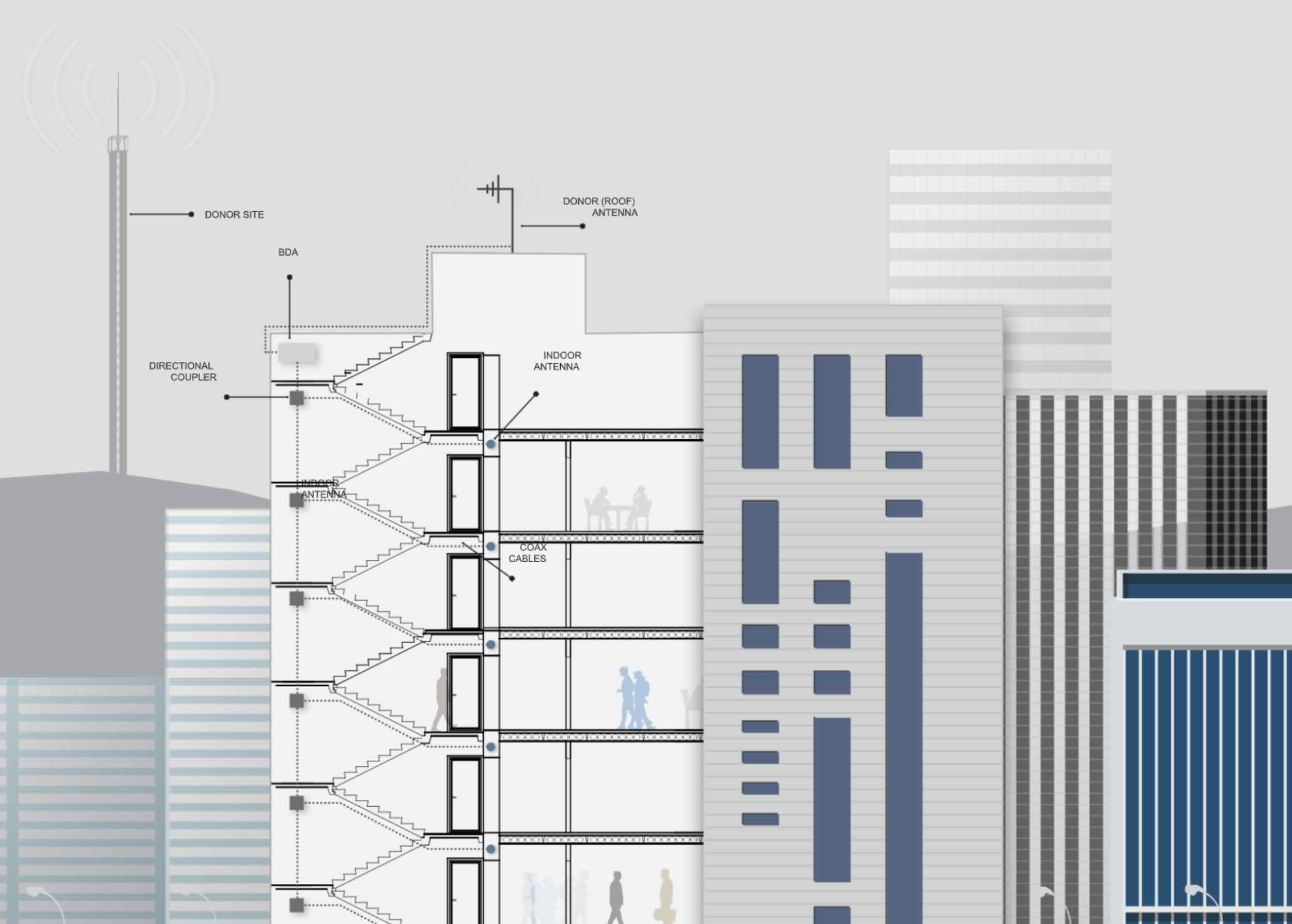
Because of this, surveillance systems must do more than capture video. They must integrate securely with supporting infrastructure, including BDAs, DAS, and portable towers, to maintain signal strength and operational coordination during deployment.
True military surveillance equipment supports encrypted feeds, continuous monitoring, and layered perimeter defense while remaining fully integrated with secure communication networks.
Applications of Military Surveillance Systems
Military and public safety environments vary. Equipment must adapt to each scenario.
Forward Operating Bases and Perimeter Defense
At fixed or semi-permanent bases, systems may include:
- Elevated masts for long-range observation
- 360-degree camera coverage
- Thermal imaging for nighttime detection
- Integrated LED lighting
Perimeter defense requires continuous monitoring and dependable power systems.
Mobile Command and Rapid Response Units
Convoy routes and temporary checkpoints demand mobility.
Mobile surveillance supports:
- Rapid repositioning
- Quick setup and breakdown
- Elevated camera systems
- Real-time monitoring
Vehicle-mounted systems and deployable trailers allow teams to adapt quickly to changing terrain and threat conditions.
Mobile video surveillance has transformed modern security operations by allowing agencies to deploy real-time monitoring capabilities wherever threats emerge.
Public Safety and Emergency Response
Military-grade systems also serve:
- Disaster relief operations
- Crowd control at large events
- Temporary incident command centers
- Border and infrastructure protection
In 2023, the United States experienced 28 separate weather and climate disasters that each resulted in at least $1 billion in damages, a record number of costly extreme events. These large-scale disasters often strain local and regional response systems and can require temporary security and communication infrastructure in unstable environments.
Deployable surveillance systems provide fast coverage where permanent systems are not available.
Choosing the Right Military Surveillance Solution
Selecting the right solution depends on mission demands.
Ask these questions:
- What environmental conditions will the system face?
- How quickly must it deploy?
- What level of imaging capability is required?
- Does the system require encrypted communication?
- Will it integrate with existing tactical infrastructure?
Consider:
- Coverage range
- Power redundancy
- Transport and setup time
- Terrain and climate conditions
- Compatibility with other tactical assets
Customized surveillance packages ensure tactical solutions and gear match the specific mission profile.
Conclusion: Military-Grade Means Mission-Ready
Military-grade is not just a label. It represents field-tested resilience, secure communication, and rapid deployment capability.
True military surveillance equipment delivers:
- Rugged durability
- Advanced night vision and thermal imaging
- Secure encrypted communication
- Hybrid power reliability
- Rapid mobility
These features support perimeter defense, convoy security, disaster response, and tactical operations in extreme conditions.
If you are evaluating military surveillance equipment for your agency or unit, the right system begins with the right configuration. Deployment environment, mobility requirements, imaging range, and network security all matter.
Contact Critical Tech Solutions to discuss your mission requirements and build a customized, field-ready surveillance solution designed for real-world conditions.