
Field-Swappable Quick-Deploy System · SOCOM Sole Source
The RATT
Field-Swappable Rapid-Deploy Tower & Telescopic Mast System
One mast. Four mounts. Field-configured for your mission. Deploy a mobile surveillance tower, antenna mast, lighting tower, or Starlink connectivity platform in under 10 minutes. One operator. No tools. No IT required.




Trusted by Public Safety and Military Agencies Across the Globe
SOCOM, U.S. Border Patrol, state police, sheriff's departments, municipal police, fire and EMS, campus security, private commercial operations, and international military and defense customers. See real-world deployments in our customer stories.
Field-Proven
Built for Where the Mission Takes You
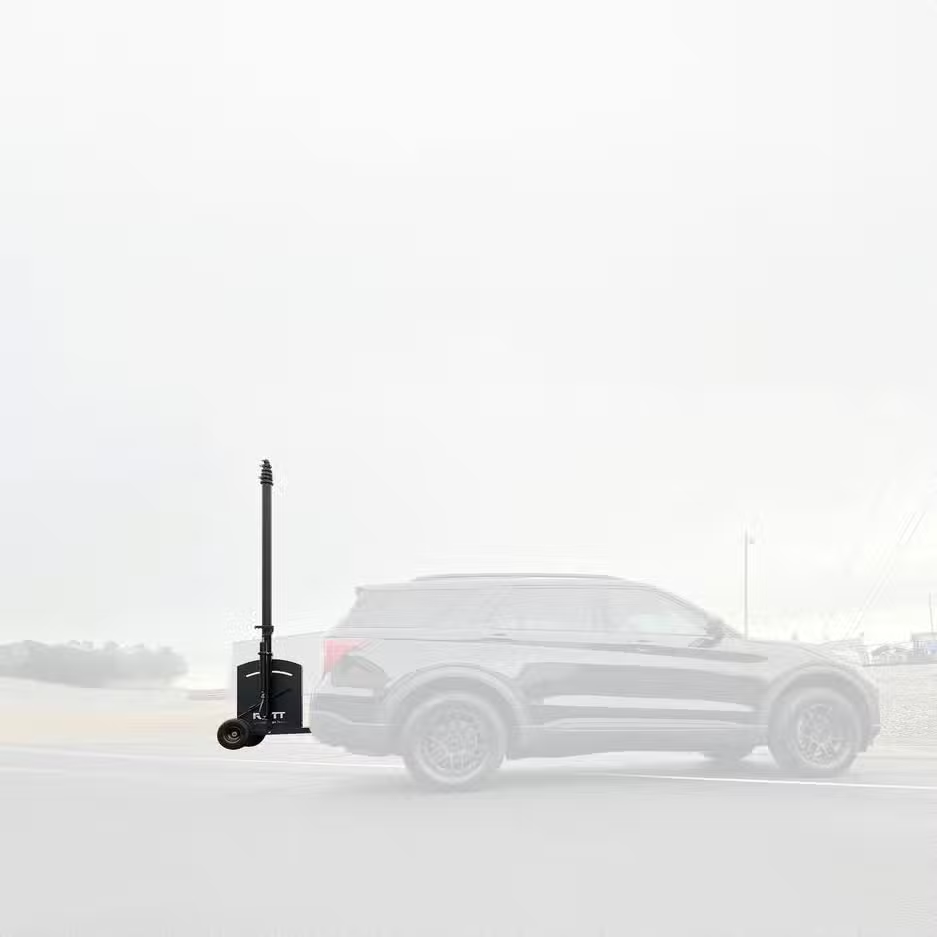
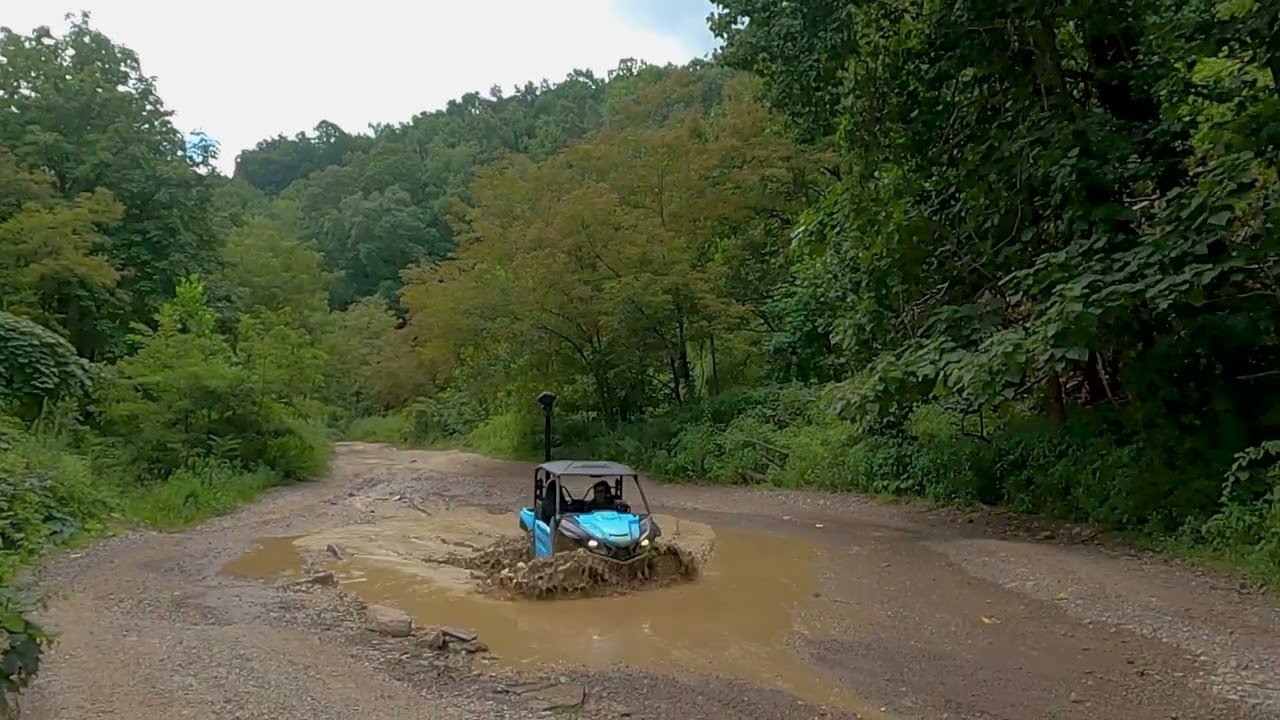
The RATT goes where your hitch-equipped vehicle goes. Patrol SUV. Command truck. UTV. ATV. Fleet pickup. One operator. Ten minutes. Every terrain.
Quick-Deploy. Low-Maintenance. Mission-Ready.
CTS builds rapid-deploy tactical towers so public safety and military teams can get eyes up fast. No rushed setups. No botched missions. No IT involvement. The RATT is simple enough that a single operator can deploy from a Pelican case to a 50-foot elevated camera in under 10 minutes.
- ✓One-person setup
- ✓Deploy in 10 minutes or less
- ✓Low maintenance, no recurring fees
What Is The RATT?
One Field-Swappable Mast System. Four Mounts. Every Mission.
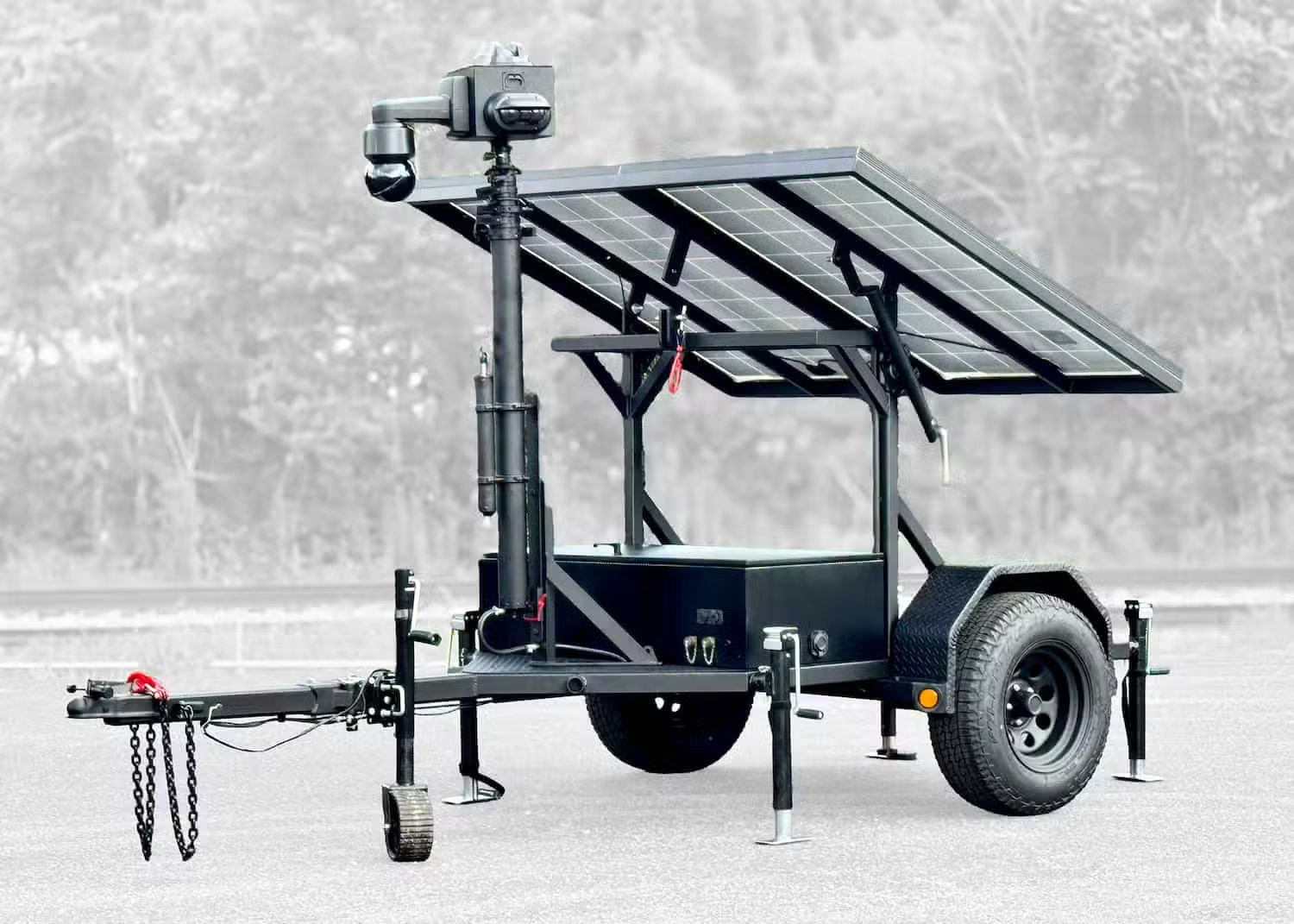
The RATT (Rapid All-Terrain Tower) is the only mast system engineered to swap between four mount types in the field: vehicle hitch, tripod, wall mount, or solar surveillance trailer. No tools, no crew, no IT support. One operator deploys to 50 feet in under 10 minutes.
Built for law enforcement, military, public safety, and commercial field operations, The RATT elevates PTZ cameras, multisensor arrays, P25 antennas, 5G boosters, Starlink, lighting, LRAD, and thermal imaging. Open ecosystem. Works with any RTCC or VMS platform. NDAA/TAA compliant.
SOCOM selected The RATT as a sole source award. Federal, state, and local agencies buy direct through sole source procurement or TIPS Contract #230105.
One Mast. Four Mounts.
The Field-Swappable Deployment Matrix
Start on a hitch. Move to a tripod. Mount to a wall. Drop onto the FST-44 solar trailer. One mast carries the mission across every deployment scenario.
The Field-Swappable Difference
Your Mission Changes. Your Mast Doesn't.
Traditional mast systems lock you into a single mount. A hitch-mounted tower cannot become a tripod. A trailer-mounted mast cannot be redeployed to a wall. Every mission change means a second system, a second purchase, a second training.
The RATT field-swappable system is the only mast engineered with mounting clamps that transfer between all four mount types in the field. The same mast you deployed on a patrol SUV at a DUI checkpoint last night can move onto the FST-44 trailer for a week-long event surveillance mission tomorrow. One system. One purchase. Every scenario.
What Agencies Say
Deployed by Command Staff Who Depend on It Daily



Built for Every Mission
Open Ecosystem. ONVIF Compliant. No Lock-In.
Mount ONVIF-compliant IP cameras, radio antennas, lighting arrays, and mission-specific sensors. Works with any RTCC or VMS platform. CTS configures devices before shipment so operators deploy without involving IT.
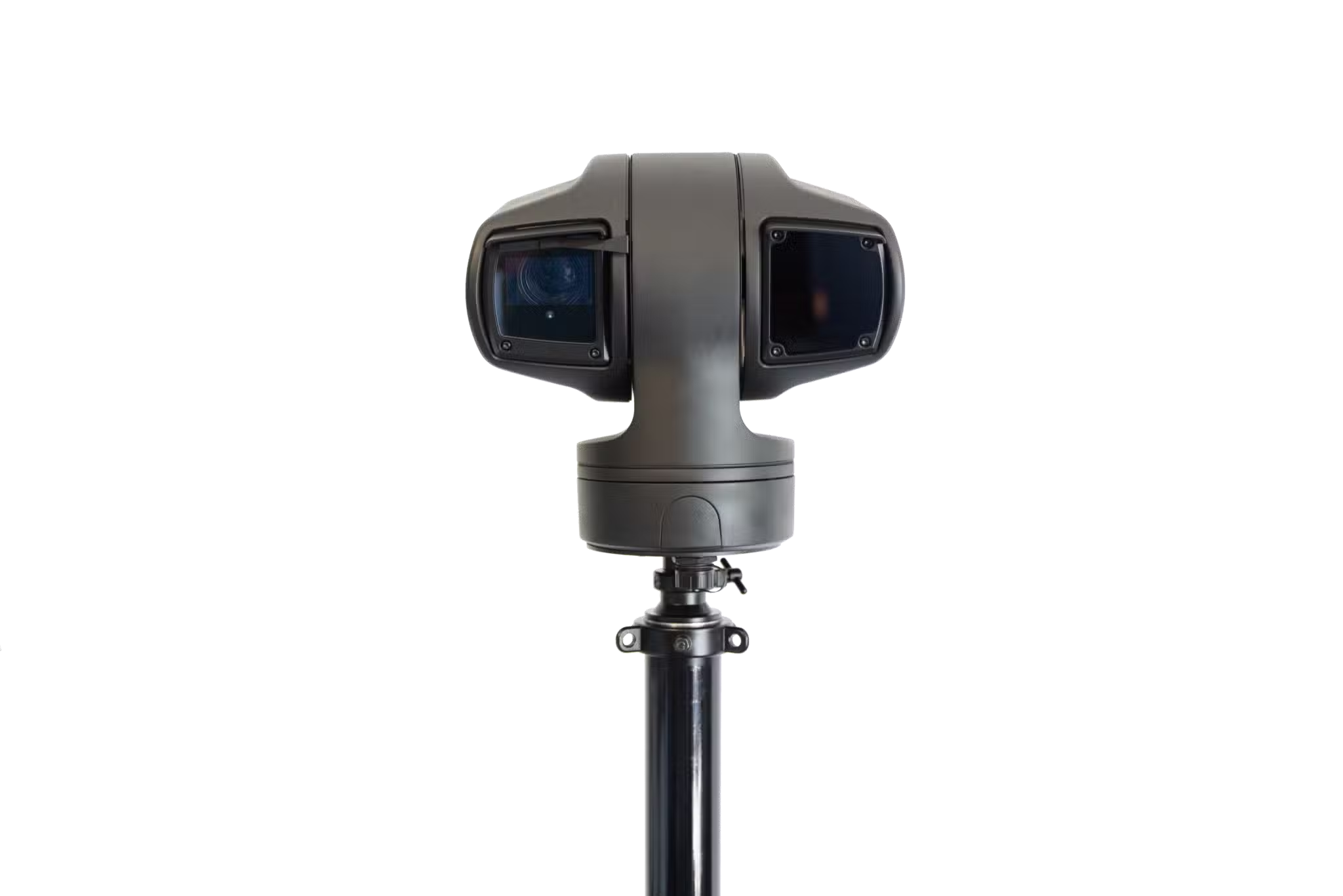
Surveillance Cameras
PTZ, multisensor, thermal, bullet, and LPR cameras from Axis, Hanwha, Avigilon, Pelco, and Silent Sentinel. CTS configures each camera for the specific use case: event overwatch, perimeter, LPR lanes, or tactical observation.
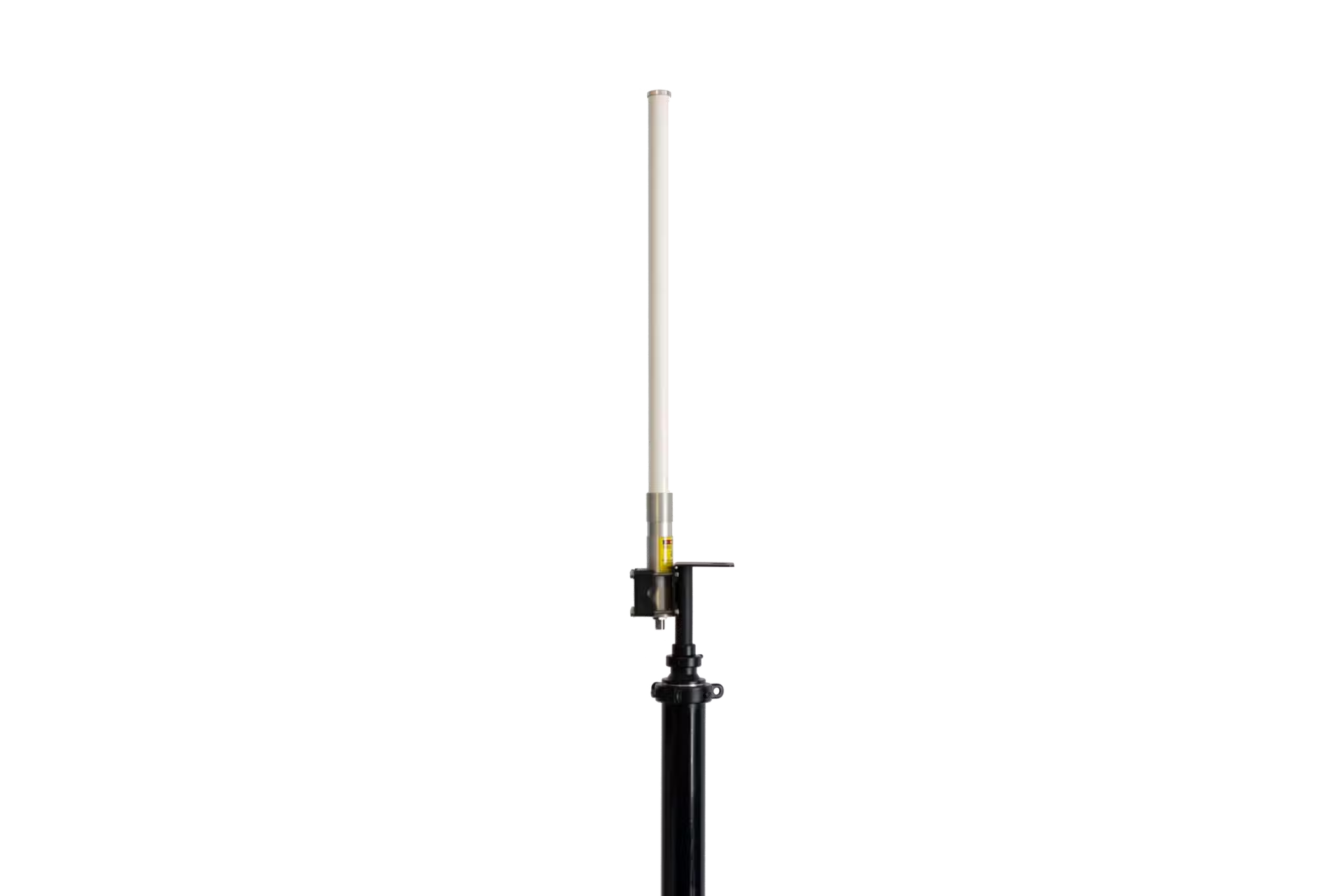
Antennas & Connectivity
P25 public safety radio, LTE and 5G cellular boosters, mesh networks, and bonded cellular routers from Sierra Wireless and Peplink.
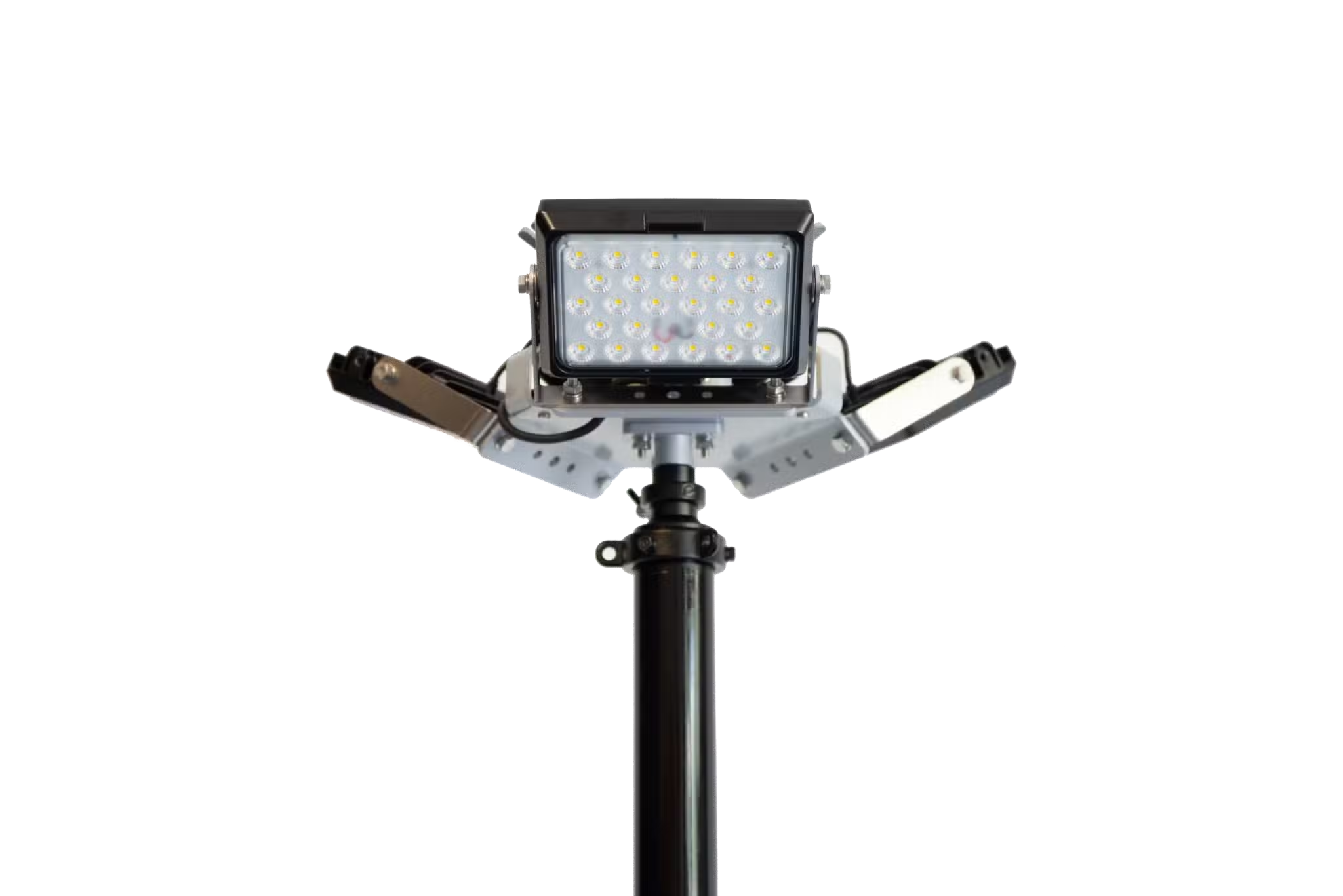
Lighting & Sensors
LED tactical scene lighting, LRAD acoustic hailing, thermal imaging, security radar, counter-drone detection, weather stations, and specialty payloads up to 77 lbs.
Need a custom device configuration or mounting solution? Request a custom quote.
50+ Field-Proven End Uses
One Platform. Every Mission.
Surveillance is one application. Every mission below is documented in the field with real CTS customer deployments, partner integrations, or technical configurations.
How It Works
One-Person Deployments Made Simple.
Connect. Elevate. Deploy. Three steps. One operator. Under 10 minutes from parking brake to full elevation. The same process on every hitch-mounted RATT deployment.
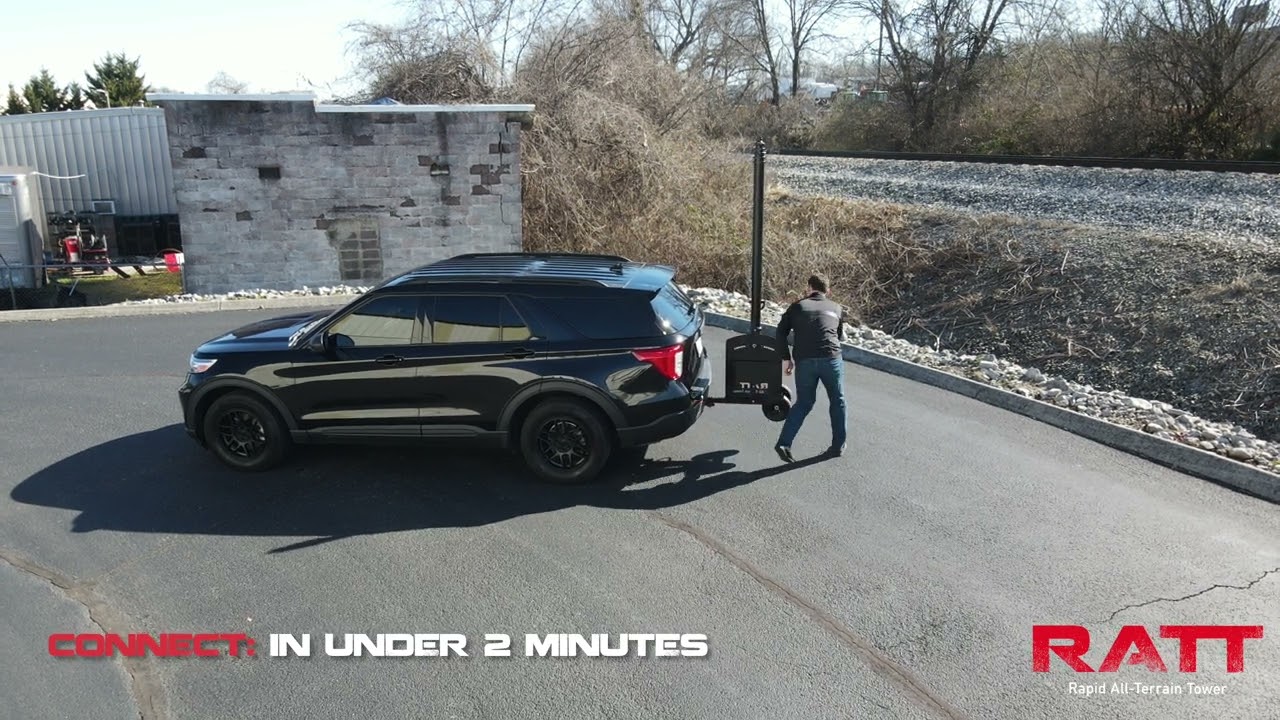
Step 1
Connect
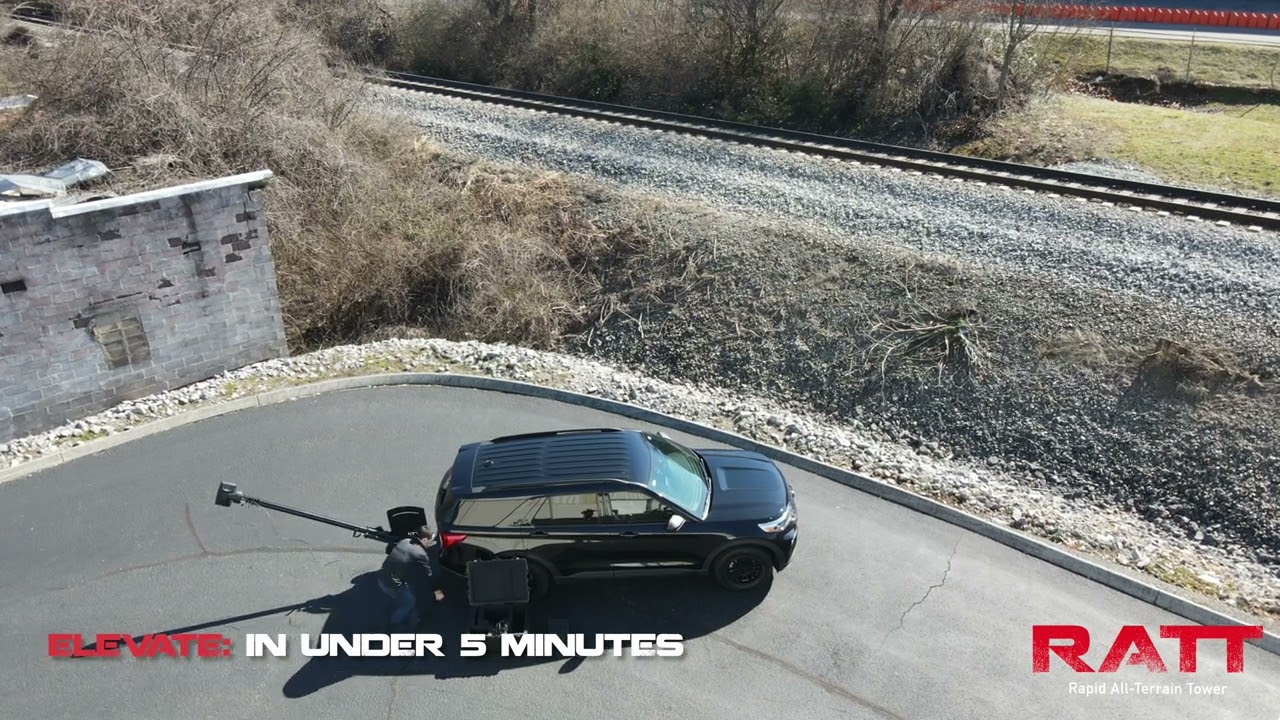
One person rolls The RATT to any vehicle with a Class III 2-inch hitch receiver and connects in under 2 minutes. The RATT goes anywhere your vehicle can go.
Step 2
Elevate
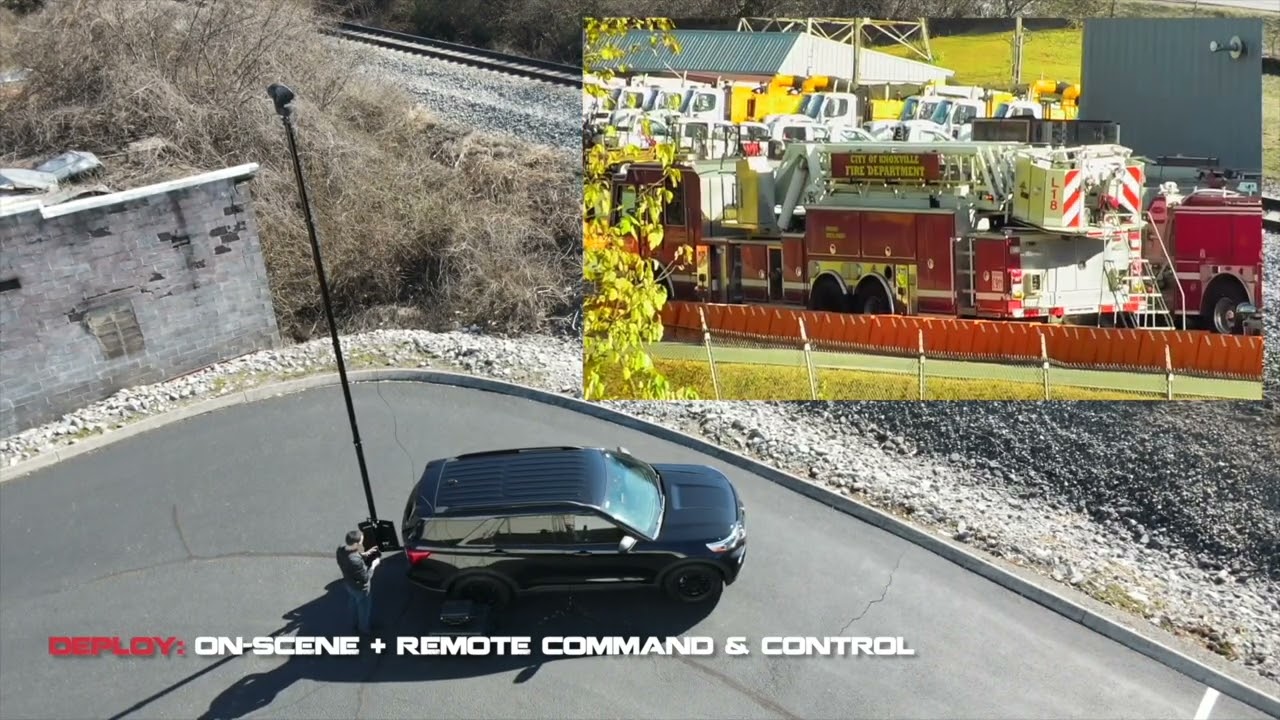
Raise the mast from 16 to 50 feet in under 5 minutes. Uneven ground is no problem. Now you have the height to see the whole scene, make the right call when it counts, and extend radio coverage by mounting an antenna on top.
Step 3
Deploy
Mast is up. Now your gear goes to work. Cameras, radios, scene lighting, antennas. Day or night, on-scene or streaming back to the command center. One platform, every mission.
The RATT vs. The Alternatives
Why Agencies Choose The RATT
Agencies comparing field surveillance options often evaluate The RATT against drones, traditional fixed-mount masts, and subscription-based surveillance trailers. Each solves a different problem. Here is how The RATT compares.
vs. Drones
Persistent Overwatch Without Part 107
Drones and telescopic masts solve different problems. Drones require FAA Part 107 certified pilots, battery swaps every 20 to 40 minutes, airspace approvals, and pre-flight checks before every mission. Most cannot fly at night or near crowds without specific waivers. The RATT elevates cameras, antennas, and sensors from a fixed position for hours, days, or weeks. No pilot certification. No waivers. No batteries to swap. Most public safety agencies deploy both: drones for rapid aerial search or pursuit, The RATT for sustained overwatch at a known location.
Mast vs. Drone Guide →vs. Fixed-Mount Masts
One Mast. Four Mounts. One Purchase.
Traditional telescopic masts lock operators into a single mount configuration. A hitch-mounted mast stays on the hitch. A trailer-mounted mast never leaves the trailer. When the mission changes, agencies buy a second system, train on a second platform, and carry two inventories. The RATT is the only rapid-deploy mast engineered to move between four mount types in the field without tools: vehicle hitch receiver, freestanding tripod, wall mount, or FST-44 solar surveillance trailer. One mast. One operator training. Every deployment scenario from DUI checkpoints to week-long event surveillance.
Field-Swappable Platform →vs. Subscription Trailers
You Own It. No Monthly Fees.
Many remote surveillance trailers are sold on recurring-fee subscription models. Agencies lease the hardware, pay monthly cloud and software fees, and lose access to their own footage if the contract lapses. Camera feeds often require the vendor's proprietary software, locking out integration with existing command platforms. The RATT is purchased outright. Agencies own the hardware from day one. No monthly fees. No proprietary software. No lease obligations. Cameras feed directly into your existing RTCC or VMS platform: Fusus, Motorola CommandCentral Aware, Genetec, Milestone, or any ONVIF-compliant system.
Solar Surveillance Trailers →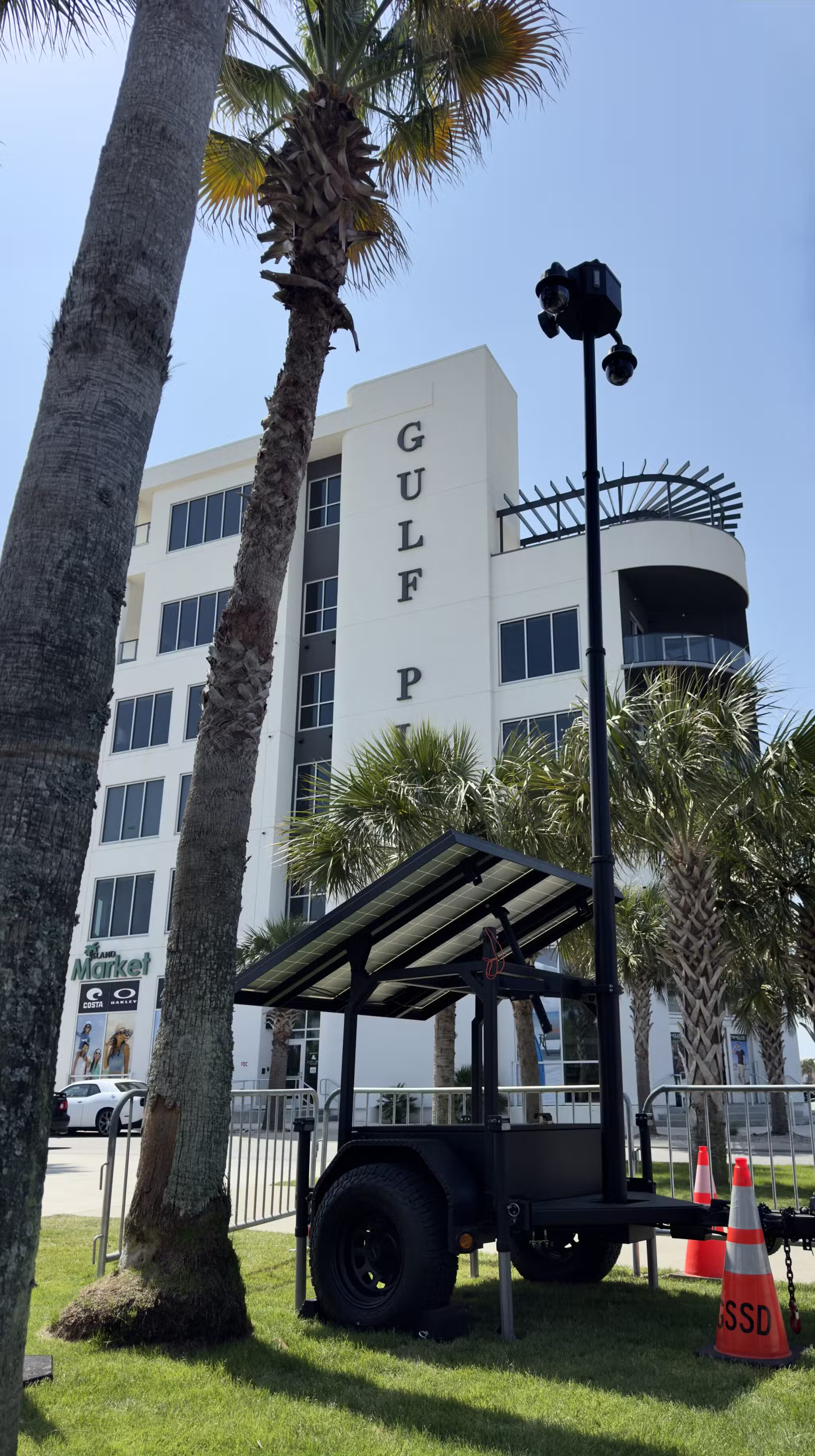


Configurations & Pricing
Configure The RATT for Your Mission
Start with a mast. Add any mount. Configure any device payload. Every RATT configuration is NDAA/TAA compliant when specified with compliant electronics and available through sole source procurement or TIPS #230105.
Mobile Surveillance Tower
RATT RQ621
Single-sensor PTZ camera on a field-swappable RATT mast. Deploy on vehicle hitch, tripod, wall mount, or FST-44 solar trailer.
View Configuration →360 Multisensor + P25
RATT RQ610
5-sensor 360 multisensor camera with P25 antenna on HD RATT mast. Full-coverage surveillance plus communications.
View Configuration →Mast + Hitch Mount
RATT Hitch-Mounted Mast
Field-swappable mast configured for hitch deployment. Add any compatible device payload.
View Configuration →Mast + Tripod Mount
RATT Tripod-Mounted Mast
Field-swappable mast configured for freestanding tripod deployment. Any terrain, rooftop, no vehicle required.
View Configuration →Mast + Wall Mount
RATT Wall-Mounted Mast
Field-swappable mast configured for wall-mount deployment. Buildings, trailers, command vehicles, rooftops.
View Configuration →Solar Surveillance Trailer
FST-44 with Field-Swappable Mast
The only solar trailer with a field-swappable RATT mast. Deploy the trailer. Swap the mast off for a hitch or tripod mission. Move it back.
View Configuration →FAQ
The RATT System: Frequently Asked Questions
What is The RATT?
The RATT (Rapid All-Terrain Tower) is CTS's field-swappable quick-deploy mast system. Built for law enforcement, military, public safety agencies, and commercial field operations, The RATT elevates cameras, antennas, lighting, and communication devices to heights of 10 to 50 feet in under 10 minutes. It deploys on a vehicle hitch receiver, tripod, wall mount, or solar surveillance trailer. One mast, any mount, any mission. The RATT is the foundation of a CTS sole source contract and is deployed by agencies across the globe.
Who uses The RATT?
The RATT serves a wide range of operators beyond traditional public safety. Law enforcement agencies use it for special event surveillance, DUI checkpoint overwatch, and crime deterrence. Military and government teams deploy it for tactical reconnaissance and communications. Commercial enterprises and field teams use it for drone and UAS program support, agricultural operations, perimeter security, and infrastructure monitoring. Universities and research institutions have deployed it for field science programs including environmental monitoring and unmanned systems research. Utilities, construction firms, and private security operations also rely on The RATT for rapid elevated access across temporary and remote locations. See real-world examples in our deployment stories.
How many ways can The RATT be deployed?
The RATT deploys in four configurations. The vehicle hitch receiver connects to any Class III 2x2 inch hitch in under 2 minutes. The freestanding tripod mount deploys on any terrain without a vehicle. The wall mount fixes to a permanent structure, mobile command vehicle, or building rooftop. The solar surveillance trailer serves as the field-swappable mast on the FST-44 for long duration autonomous operations. One mast, four mounts, any mission.
How fast can one person deploy The RATT?
One operator can deploy The RATT from a vehicle hitch receiver in under 10 minutes from start to full elevation. The mast connects to the hitch receiver in under 2 minutes and pneumatically extends to 35 feet in less than 2 minutes. No tools, no crew, and no IT support required. The same single-operator deployment applies to tripod and wall mount configurations.
What type of vehicle is required to connect The RATT?
Any vehicle equipped with a Class III 2x2 inch square hitch receiver can be used, including law enforcement SUVs, trucks, command vehicles, UTVs, and standard government and commercial fleet vehicles. Law enforcement and military teams commonly deploy from purpose-built UTVs. The RATT can also be adapted to suit pintle hitch locations on military vehicles such as Humvees and can be configured for other receiver types used in international deployments.
What is the maximum height of The RATT?
The RATT ranges from 10 to 50 feet in height. Most standard law enforcement and commercial configurations reach 35 feet. Some versions include lockable collars that restrict extended height for specific applications such as LPR, facial recognition, drone corridor monitoring, and other precision end uses. Custom configurations beyond 50 feet are available on request. Contact CTS with your requirements.
What is the payload capacity of The RATT mast?
The standard RATT mast supports a recommended payload of 35 lbs, accommodating PTZ cameras, IP cameras, P25 antennas, signal boosters, bird deterrent lasers, agricultural sprayers, and other field devices. The HD RATT mast supports a recommended payload of 60 lbs for heavier multi-sensor arrays and bonded cellular routers. Payload limits should always be verified against your specific device configuration before deployment.
How does The RATT extend and retract?
The RATT extends pneumatically using either a manual mast-mounted hand pump or an optional 12V DC electric pump. Either pump fully extends The RATT within 2 to 3 minutes and retracts within 60 seconds. The o-ring style telescopic mast design provides best-in-class rigidity across all payload configurations and terrain types.
Does The RATT require guy wires for support?
Guy wires are required for all deployments at 33 feet and above, and for any configuration that requires maximum stability regardless of height. This includes deployments with sensitive equipment payloads, long-duration unattended operations, or installations in exposed locations. The specific guying requirements vary based on mast height, payload weight, and site conditions. CTS offers guying kits for all RATT configurations and recommends consulting with our team to spec the right setup for your deployment.
Does the payload move or sway when elevated?
Some movement can occur depending on wind speed, payload weight, and mast selection. Properly guyed RATT masts minimize sway for sensitive payloads such as PTZ surveillance cameras and directional antennas. For payloads requiring maximum stability, CTS can spec the HD RATT mast with a full guying kit.
How is The RATT powered and what is its operating duration?
The RATT mast itself requires no power to operate once pneumatically elevated. Device payloads (cameras, antennas, routers) run on vehicle power, the FST-44 solar trailer's LiFePO4 lithium 48V DC system, or independent battery packs. On the FST-44 solar trailer, autonomous operation extends to weeks without external power. For hitch and tripod configurations, operating duration matches the power source connected to the payload devices.
From ground level, how high is The RATT when fully retracted?
When fully retracted, The RATT collapses to under 10 feet in height, allowing safe transport, storage, and overhead clearance in most vehicle and trailer applications. The specific retracted height varies slightly by mast model and mount configuration.
Can you drive the vehicle with The RATT elevated?
The pneumatic telescopic mast must be fully retracted before driving. However, a small camera or RF antenna can be operated in the lowered mast position while driving with the safety pin engaged. These lowered configurations provide situational awareness for vehicle convoys and can be used to test RF coverage, signal levels, and data speeds in real time.
Are there any limitations or warnings with The RATT?
The RATT must not be operated near power lines, during lightning, or under overhead obstructions. It is designed as a rapid-deploy platform for light-duty elevated applications with defined payload and environmental limits. Unlike UAV and drone alternatives, The RATT does not require FAA Part 107 waivers for nighttime operation or use near crowds, which is a significant operational advantage for public safety, commercial security, and field operations teams.
What cameras and devices work with The RATT?
The RATT is an open ecosystem platform compatible with any ONVIF-compliant IP camera and a wide range of non-camera devices. Beyond surveillance cameras, The RATT has been deployed with RF antennas, P25 communications equipment, bird deterrent lasers, agricultural sprayers, drone corridor monitoring equipment, and lighting arrays. CTS configures devices before shipment so operators are not required to involve IT. Need a custom device configuration? Request a custom quote.
Can The RATT live stream or be accessed from the cloud?
Yes. Every RATT surveillance configuration ships with a 256 GB SD card for edge storage (upgradable to 1 TB) and 12 months of cloud storage with 30-day retention (scalable to 60 or 90 days). Cameras are accessible from any browser or the iOS, Android, or Windows app. No NVR, no camera server, no laptop required.
Does The RATT integrate with our RTCC or VMS platform?
Yes. The RATT is an open ecosystem platform with no proprietary lock-in. Cameras feed directly into any real-time crime center or video management platform including Fusus, Motorola CommandCentral Aware, Genetec, Milestone, Avigilon, and other ONVIF-compliant VMS platforms. CTS also partners with Airship AI, Motorola Solutions, Avigilon, Pelco, Silent Sentinel, Axis, Hanwha, Peplink, Sierra Wireless, and CamStreamer.
Is The RATT NDAA and TAA compliant?
Yes, when configured with NDAA/TAA-compliant IP-based electronics. The RATT mast itself is an aluminum mechanical platform and is not subject to NDAA or TAA electronics compliance. When specified with CTS's standard IP-based electronics (cameras, routers, radios), the complete RATT configuration is fully NDAA and TAA compliant and eligible for federal, state, and local government procurement.
Is The RATT available on a government purchasing contract?
Yes. Government and public safety agencies can purchase The RATT through CTS sole source procurement (no competitive bid required, no fees to CTS) or through TIPS Contract #230105 for no-bid purchasing across all 50 states.
Does The RATT require a subscription or ongoing service contract?
No. The RATT is purchased outright. Agencies own the hardware from day one. Unlike subscription-based surveillance competitors, there are no monthly fees, no recurring software charges, and no lease obligations. Optional cloud storage is included for 12 months and can be extended or self-managed thereafter.
What is the difference between The RATT and a solar surveillance trailer?
The RATT is a field-swappable mast system that deploys on four mount types including a solar trailer. A solar surveillance trailer is a purpose-built autonomous platform for long-duration unattended operations. The FST-44 is the only solar trailer with a field-swappable RATT mast, giving agencies the flexibility to use the mast on the trailer for a week-long event, then swap it onto a vehicle hitch for a DUI checkpoint the following night. The FXT-44 and FXT-46 trailers use fixed, heavier-duty masts for permanent trailer-based deployments.
Which is better for field surveillance: a drone or a telescopic mast?
A telescopic mast and a drone solve different problems. Drones offer mobility and aerial perspective but require FAA Part 107 certified pilots, battery swaps every 20 to 40 minutes, airspace approvals, and cannot operate in high winds or at night without waivers. The RATT provides persistent elevated surveillance from a fixed position for hours or weeks with no pilot required, no waivers, and no battery constraints. Most public safety agencies deploy both, using drones for rapid search and the mast for sustained overwatch. Read our guide on when to use mast vs drone vs pole cam surveillance.
What are the advantages of elevated mobile surveillance and field monitoring?
Elevating a camera from 6 feet to 35 feet does not just add 29 feet of height. It transforms the field of view from a parking lot to a neighborhood. Elevating a P25 antenna from a vehicle roof to 40 feet can turn a dead radio zone into a functioning communications link. Elevated surveillance increases coverage area, reduces blind spots, extends effective IR and optical range, and improves signal propagation for all RF-based devices.
What is a telescoping or telescopic mast?
A telescopic mast is a portable, extendable pole made of nested tubular sections that slide inside one another to reach heights of 10 to 50 feet or more. Pneumatic telescopic masts use compressed air to raise and lower the sections, which means one person can deploy the entire system in under 10 minutes without electricity, fuel, or a crew. The RATT is CTS's field-swappable pneumatic telescopic mast system.
How long does it take to deliver The RATT?
Standard RATT configurations typically ship within 4 to 6 weeks from order confirmation. Custom configurations and trailer-integrated systems vary based on device selection and lead times from partner manufacturers. Contact CTS for an accurate lead time on your specific configuration.