
Reliable field communications are critical during military and public safety operations. The Department of Homeland Security’s National Emergency Communications Plan emphasizes the need for interoperable and resilient communication systems during disasters and large-scale incidents. In these environments, masts elevate antennas, cameras, sensors, and lighting to improve signal range and line of sight.
In operational terms, an antenna mast describes the role a mast plays in supporting communication equipment, while a telescopic mast describes how that mast deploys. Many systems combine both characteristics.
This guide compares how mast systems are configured for fixed, semi-permanent, or mobile missions so decision-makers can select the right solution for their environment.
Understanding Antenna Masts and Telescopic Masts
An antenna mast refers to a mast used to elevate antennas in order to improve signal range, line of sight, and communication reliability. Depending on mission needs, antenna masts may also support cameras, sensors, and lighting.
A telescopic mast describes how a mast deploys. Telescopic masts extend vertically from a collapsed position, allowing equipment to be raised quickly and retracted just as fast. Many telescopic masts function as antenna masts, particularly in mobile and temporary operations.
Antenna Masts
In military and public safety environments, antenna masts are used to elevate radios, LTE systems, and communication relays to improve signal range and line of sight.
An antenna mast is defined by its purpose, not by deployment duration. These systems may be fixed, guyed, telescopic, ground-based, vehicle-mounted, or trailer-mounted depending on mission requirements.
They are designed to:
- Improve signal coverage and reliability
- Support antennas and sensors
- Provide stability appropriate to mission duration
For longer deployments, antenna mast systems may be anchored and reinforced for sustained operation. In shorter missions, they may be configured for quicker setup and redeployment.
In all cases, the primary function remains the same: providing elevation and stability for field communication equipment.

Telescopic Masts
Telescopic masts are defined by how they deploy. They extend vertically from a collapsed position, allowing equipment to be raised and lowered quickly. Many telescopic systems function as antenna masts during mobile and temporary operations.
These systems are commonly:
- Manually or mechanically operated
- Mounted on a vehicle, wall, trailer, or tripod legs
- Integrated into mobile command centers or surveillance platforms
They prioritize rapid setup, repositioning, and repeat use in dynamic operational environments.
For short-term missions, telescopic masts allow teams to establish communication capability within minutes. In longer operations, they can remain extended as needed, provided environmental conditions support safe deployment.

Antenna Towers
Antenna towers are permanent telecommunications structures designed for long-term infrastructure. Unlike deployable mast systems, antenna towers are engineered for multi-year or multi-decade use.
These structures are typically:
- Tall steel lattice or monopole systems
- Installed on engineered foundations
- Constructed by specialized crews
- Designed for commercial cellular or broadcast networks
While antenna masts and telescopic masts are built for field deployment and mobility, antenna towers prioritize permanent coverage and maximum height.
For military and emergency operations, permanent towers are rarely practical in rapidly changing environments. Deployable mast systems provide the flexibility needed for forward operating bases, mobile command centers, and rapid-response missions.

Key Differences Between Antenna and Telescopic Masts
Choosing the right mast depends less on what equipment is mounted and more on how the system is deployed and how long it is needed in the field.
Deployment Speed and Setup
Deployment speed is often one of the first operational considerations when selecting a mast system. However, setup time is determined by how the mast is configured, not simply by whether it is described as an antenna mast or a telescopic mast.
Rapid-deploy mast configurations, which are commonly telescopic, are designed to:
- Extend vertically from a compact position
- Be operated by small teams
- Require minimal tools
- Establish communication capability within minutes
These systems are frequently used in mobile command centers, convoy operations, and emergency response missions where immediate elevation is required.
Mast systems configured for longer-duration installations prioritize stability over speed. These may:
- Require anchoring or guying
- Involve more site preparation
- Support heavier communication equipment
- Remain in place for weeks or months
In these cases, additional setup time results in greater structural stability and sustained performance.
After Hurricane Katrina, federal reviews documented widespread communication failures that slowed coordination during the early stages of response. When fixed infrastructure is compromised, deployable mast systems can help restore temporary communication capability.
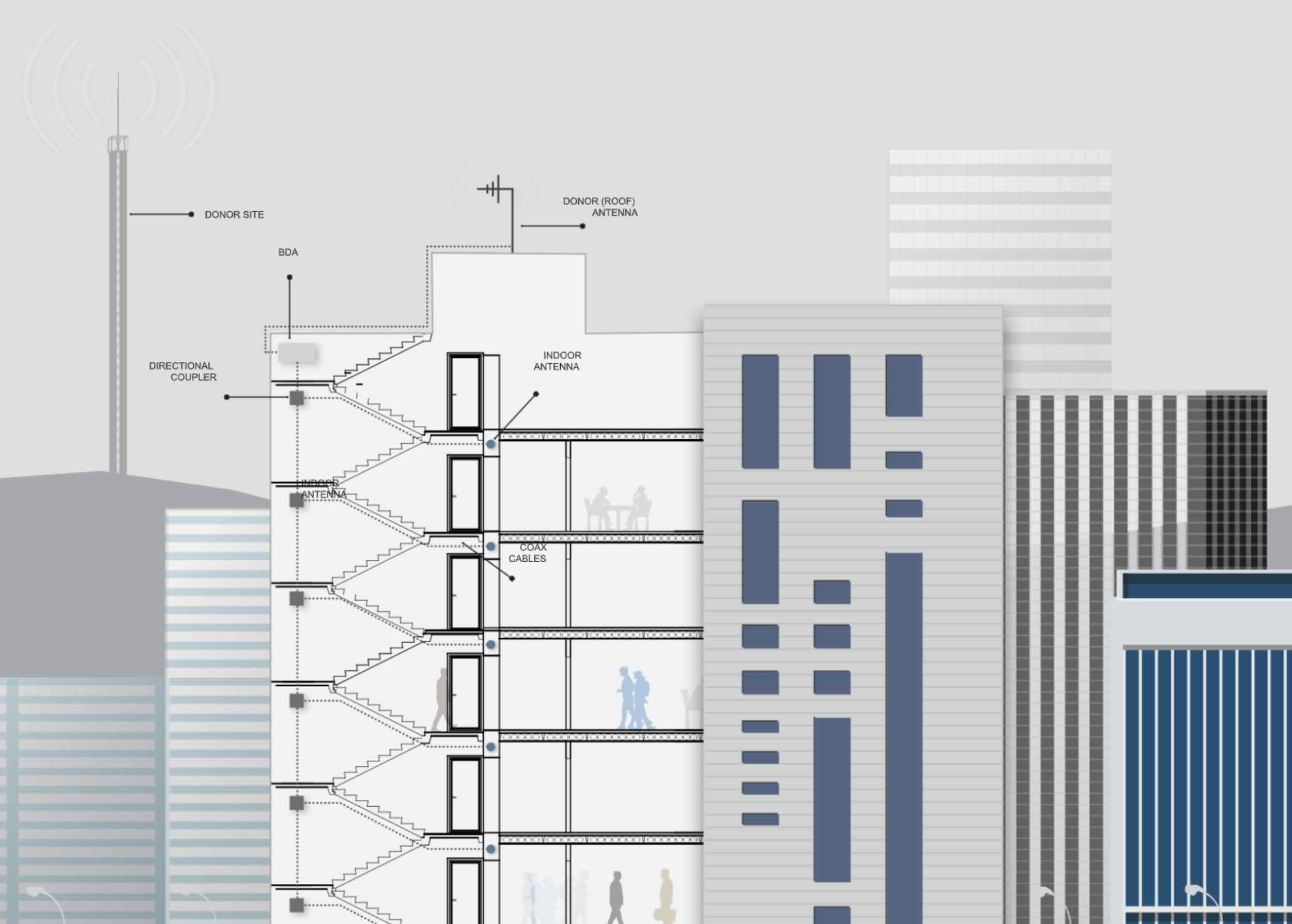
In many field operations, mast systems operate in coordination with BDAs, DAS, and portable towers to strengthen signal coverage across large or obstructed areas.
Height and Range
Height directly affects signal range and line of sight. Mast systems configured for extended deployments are often designed to maintain greater height over long periods. These may:
- Provide wide-area coverage
- Support long-range radio and LTE systems
- Remain elevated for sustained operations
- Integrate into fixed or semi-permanent communication networks
Deployable mast systems, including many telescopic configurations, prioritize adjustable elevation and mobility. These systems typically:
- Offer flexible mast height depending on terrain
- Balance elevation with transportability
- Allow repositioning to improve line of sight
- Support mobile command centers and temporary operations
Many distributed antenna systems rely on mast infrastructure to maintain consistent coverage across bases, command posts, and operational zones, especially where permanent towers are not feasible.
Stability and Durability
Wind load, terrain, temperature, and payload weight affect mast performance.
Mast systems configured for extended or semi-permanent deployment are typically:
- Anchored or guyed for increased wind resistance
- Designed to support heavier antennas, cameras, or sensors
- Engineered for continuous operation in exposed environments
- Built to maintain elevation under sustained load
Deployable mast systems, including many telescopic configurations, prioritize mobility and repeat use. These systems are generally:
- Lightweight for transport and repositioning
- Designed for rapid extension and safe retraction
- Rated for operation within defined environmental limits
- Configured to balance stability with portability
In practice, environmental durability is determined by installation method, payload weight, and operational duration rather than by whether the mast is described as an antenna mast or a telescopic mast.
Power and Signal Integration
Field operations often take place where permanent infrastructure is unavailable or compromised. How a mast system is powered and integrated depends on whether the mission is fixed or mobile.
Mast systems used in semi-permanent deployments are typically connected to base power and established communication networks.
Deployable mast systems, including many telescopic configurations, are frequently integrated into self-contained platforms such as mobile surveillance trailers, mobile surveillance towers, and temporary command posts. These systems are often powered by onboard generators, vehicle power, or battery configurations, allowing them to operate independently of fixed infrastructure.
For example, platforms like The RATT combine a telescopic mast with cameras, lighting, and communication equipment to create a rapid-deploy, standalone field capability.
In both fixed and mobile configurations, mast systems elevate radios, LTE systems, sensors, and surveillance equipment. The difference lies in whether the system supports permanent infrastructure or functions as a transportable communication asset.
As communication infrastructure becomes more mobile and data-driven, mast systems are increasingly supporting not only ground-based networks but also unmanned aerial system operations.
Drone Operations and Airspace Support
As military and public safety agencies expand their use of unmanned aerial systems (UAS), mast elevation plays an increasingly important role in both drone tracking and command-and-control operations.
Drone Tracking Systems
Drone detection and tracking systems rely heavily on clear line of sight. Elevating RF sensors, radar units, and Remote ID receivers on a mast reduces terrain masking, signal shadowing, and ground clutter.
Mast elevation can:
- Increase detection range for RF-based drone tracking systems
- Improve signal-to-noise ratio for direction-finding equipment
- Enhance low-altitude radar performance
- Provide more reliable feeds into command-and-control platforms
For counter-UAS or temporary airspace control missions, even modest mast height can significantly improve tracking performance.
BVLOS Command-and-Control Links
Beyond Visual Line of Sight (BVLOS) drone operations depend entirely on stable communication links. Most C2 radios and LTE/5G-enabled drone systems operate on line-of-sight frequencies.
Elevating command-and-control antennas on a deployable mast system can:
- Extend operational control range
- Improve link reliability in urban or obstructed terrain
- Reduce interference and multipath distortion
- Support portable private LTE or 5G networks
For mobile drone launch sites, forward operating bases, or temporary surveillance missions, mast-supported C2 infrastructure enables safer and more reliable extended-range operations.
Use Cases for Each Mast Type
In military and public safety environments, antenna mast systems are frequently deployed in:
- Forward operating bases
- Command posts
- Long-term perimeter security setups
- Fixed communication hubs
Advantages for base operations include:
- Supporting continuous field communication equipment
- Maintaining consistent signal coverage
- Handling heavier antennas and sensors
- Reducing the need for frequent repositioning
These deployments pair well with fixed radios, surveillance cameras, and established network infrastructure.
Telescopic Masts: Built for Mobility and Rapid Deployment
Telescopic mast systems are most often used when mobility and fast setup are priorities.
Common use cases include:
- Mobile command centers
- Convoy operations
- Emergency response deployments
- Temporary checkpoints and event security
Advantages for mobile units include:
- Portable and collapsible mast design
- Lightweight materials for transport
- Minimal setup requirements
- Vehicle-mounted or trailer-mounted integration
Telescopic mast systems are frequently used in mobile video surveillance platforms where speed, relocation capability, and flexible elevation are critical.
How to Choose the Right Mast for Your Mission
Selecting the right mast depends on mission duration, mobility requirements, and environmental conditions.
When evaluating mast options, consider the following factors:
Deployment duration
- Extended or semi-permanent operations may require anchored or reinforced mast configurations.
- Short-term or mobile missions often benefit from deployable telescopic systems that can be repositioned quickly.
Required signal range
- Sustained wide-area coverage may call for taller or more permanently stabilized deployments.
- Flexible, terrain-driven coverage may favor adjustable mast height that can be relocated as needed.
- Drone tracking, counter-UAS, and BVLOS operations may require elevated multi-band antennas or radar systems that influence mast height and load requirements.
Terrain and environmental conditions
- High-wind or exposed environments may require guyed or anchored configurations.
- Changing or uncertain terrain may favor lightweight, repositionable systems.
Personnel and transport availability
- Larger crews and longer setup windows allow for more complex installations.
- Small teams and rapid deployment needs favor compact, self-contained systems.
Conclusion
So which do military units need: antenna masts or telescopic masts?
The answer depends on the mission.
Antenna mast systems provide the elevation required to support radios, LTE systems, surveillance equipment, drone tracking systems, and BVLOS command-and-control links in field and expeditionary environments. Telescopic mast systems provide the mobility and rapid deployment capability required in dynamic environments for a multitude of devices. Many operational systems combine these characteristics.
The right solution depends on mission duration, mobility requirements, environmental conditions, and how quickly communication capability must be established.
If you are evaluating mast solutions for an upcoming deployment, command post, or mobile operation, contact Critical Tech Solutions to discuss your mission requirements and identify the right configuration for your environment.