
Spring break 2026 hit the Gulf Coast hard. Tens of thousands of visitors packed the beachfront in a matter of days, and Gulf Shores Police Department needed elevated eyes on the crowd that officers on the ground could not provide. They already had The RATT from previous festival deployments. For spring break, they added a Critical Tech Solutions (CTS) FXT-44 solar surveillance trailer to the beachfront. Within the first day, the cameras were contributing to arrests and the seizure of illegal firearms.
6
Firearms Seized
18+
Arrests Made
24/7
Cloud Access
2
CTS Systems
“During an unexpected spring break surge at the beachfront, we deployed the mobile solar surveillance trailer to monitor the area. The system immediately provided our team with real-time visibility and actionable intelligence. Information gathered from the trailer’s cameras ultimately led to several arrests and the confiscation of six illegal firearms. It proved to be a powerful tool for maintaining situational awareness and protecting the public.”
Detective Carl Wittstruck
Public Information Officer · Special Operations Division · Gulf Shores Police Department

The Agency
Gulf Shores Police Department serves one of the busiest coastal destinations on the Gulf Coast. During peak season the city’s population swells from roughly 15,000 residents to tens of thousands of visitors in a matter of days. The department’s Special Operations Division handles the public safety challenges that come with crowds of that scale packed into a condensed beachfront environment.
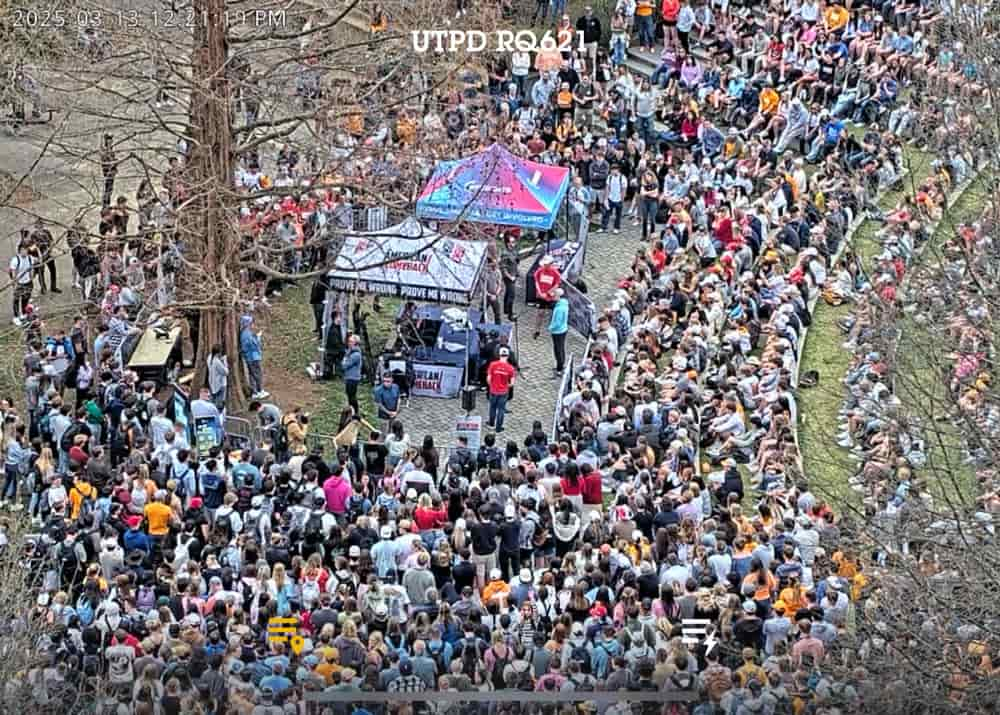
Gulf Shores Police Department is not new to Critical Tech Solutions. The department already operates a RATT RQ621 mobile surveillance tower that has been deployed at the Hangout Music Festival, on rooftops via tripod legs, and on patrol vehicles via hitch mount. When they needed persistent elevated surveillance for spring break, they added an FXT-44 remote solar surveillance trailer. That made Gulf Shores Police Department one of the first agencies in the country to operate both a CTS tower and a CTS trailer at the same time.
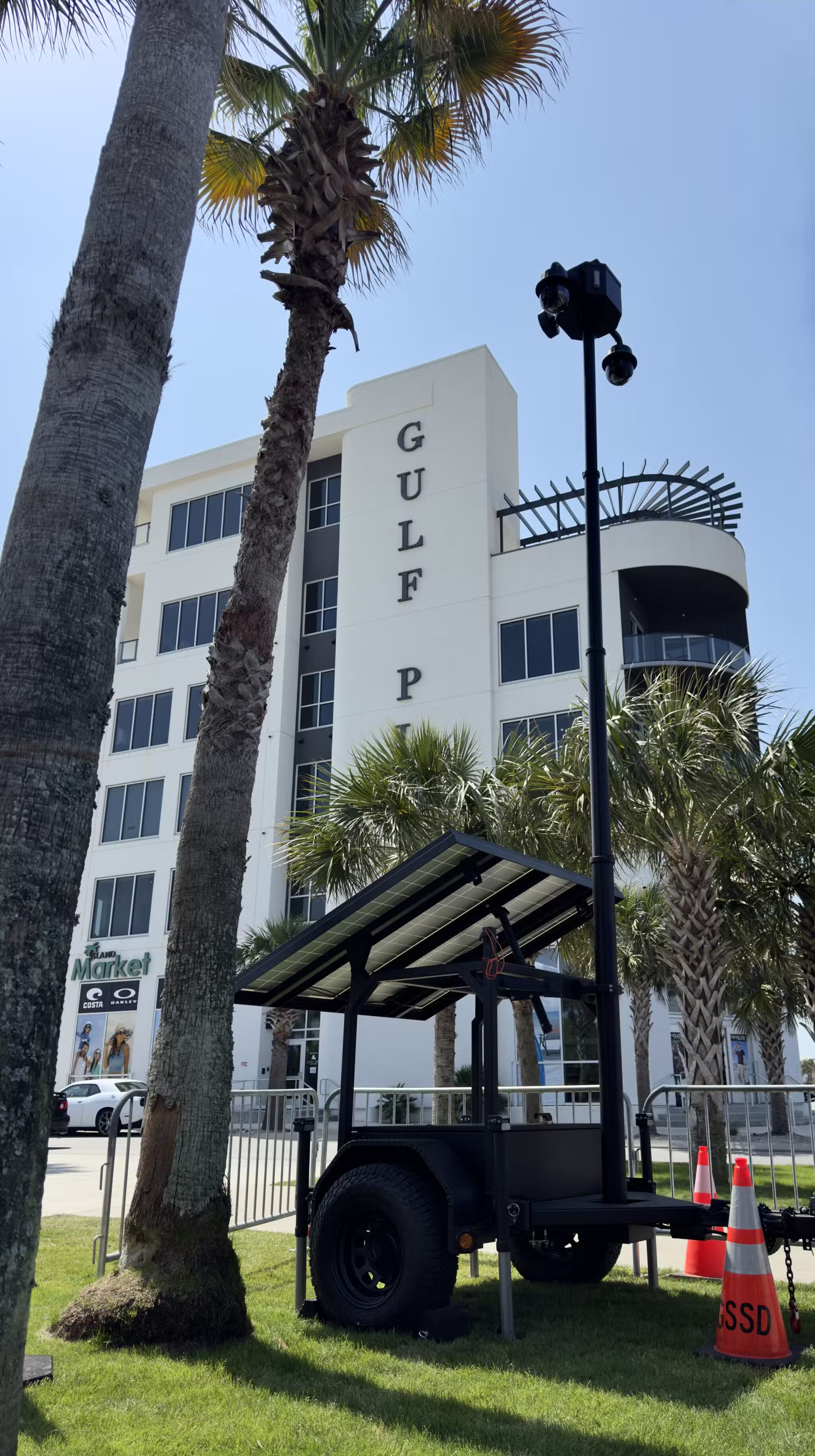
Gulf Shores Police Department FXT-44 solar surveillance trailer deployed during spring break 2026.
The Challenge
Spring break 2026 arrived with a surge. Crowds packed the beachfront, the entertainment district filled, and the pace of incidents accelerated. Officers on the ground could only see so far. Command staff needed a broader view that was live, elevated, and accessible from anywhere so they could track crowd movement, spot developing situations early, and coordinate resources before things escalated.
The deployment had to work without permanent infrastructure, without external power, and without IT support or a local network video recorder. On top of that, the Gulf Coast is tough on connectivity. Cellular coverage along the beach is spotty, and a single carrier connection is not reliable enough for mission-critical live video. GSPD needed a system that could handle all of this out of the box.
What They Deployed
GSPD deployed the CTS FXT-44 remote solar surveillance trailer to the beachfront with a custom configuration built for extended coastal operations.

GSPD’s FXT-44 deployed on the beachfront with red/blue LED lights activated.
Cameras
The FXT-44 runs dual Axis Q6325-LE PTZ cameras with 31x optical zoom and infrared illumination rated to over 820 feet. Day or night, in any lighting condition, the cameras deliver clear 1080p video at up to 60 fps across the entire beachfront from a single elevated mast position. The cameras support the AV1 video codec, which uses significantly less bandwidth than older compression standards. The compression stack behind this deployment, including AV1 and Axis Zipstream, is explained in detail in the CTS video compression deployment guide. On a cellular connection at a crowded beach, that translates directly into smoother streaming and lower data costs.
Each camera shipped with a 1 TB SD card for on-device edge recording plus 12 months of cloud storage with 30-day retention included at no extra cost. Officers and command staff access live video from any browser or the mobile app from anywhere. No NVR. No camera server. No laptop required on site.
Connectivity
A Starlink Mini satellite terminal at mast height provides broadband internet independent of any cell tower. Alongside it, a panel-mounted 5G antenna on T-Mobile Priority delivers a second high-speed data path with first responder prioritization over consumer traffic. A Peplink router with SpeedFusion bonds both connections into a single data pipe. Instead of relying on one connection and hoping it holds, both links run simultaneously. If either one degrades, the other keeps video flowing. On a coastline where cell signal fluctuates with weather and crowds, that kind of redundancy is not optional.
Power
The trailer ran autonomously on its 640W articulating solar array and LiFePO4 lithium battery bank. No generator, no shore power, no daily maintenance visits. Victron remote energy monitoring gave operators real-time visibility into battery state and solar input from their phones. Deploy it, connect it, and it works.
Two Systems. One Screen.
What makes this deployment different is that the FXT-44 is not the only CTS system in the department’s inventory. GSPD also operates a RATT RQ621 mobile surveillance tower that transformed their security posture at the Hangout Music Festival.
The FXT-44 holds a fixed position on the beachfront for persistent, autonomous surveillance. The RATT moves with the operation: rooftop via tripod one day, patrol vehicle via hitch mount the next. Two elevated camera positions at two different locations from a single department’s inventory.

Both FXT-44 PTZ cameras and The RATT RQ621 PTZ camera in a single view via ACS Edge. No NVR required.
Both systems feed into the same cloud-based interface. Officers see the FXT-44’s dual PTZ cameras and the RATT’s PTZ camera in one view from any device. Two CTS systems, two vantage points, one agency, one screen. That is deployment flexibility that no single-product competitor can match.
The Results
The deployment produced results from day one. According to Gulf Shores Police Department, information gathered from the FXT-44’s cameras contributed to multiple arrests and the confiscation of six illegal firearms during the spring break operation.
Beyond the enforcement actions, the cameras also proved valuable for real-time incident verification. When a call came in, officers could pull up the live feed and see what was actually happening before sending a team. That capability saved time, prevented unnecessary responses, and helped command staff make better decisions with better information.
The arrests and firearms seizures were covered by AL.com and FOX10 News, drawing regional attention to the department’s proactive approach to spring break enforcement.
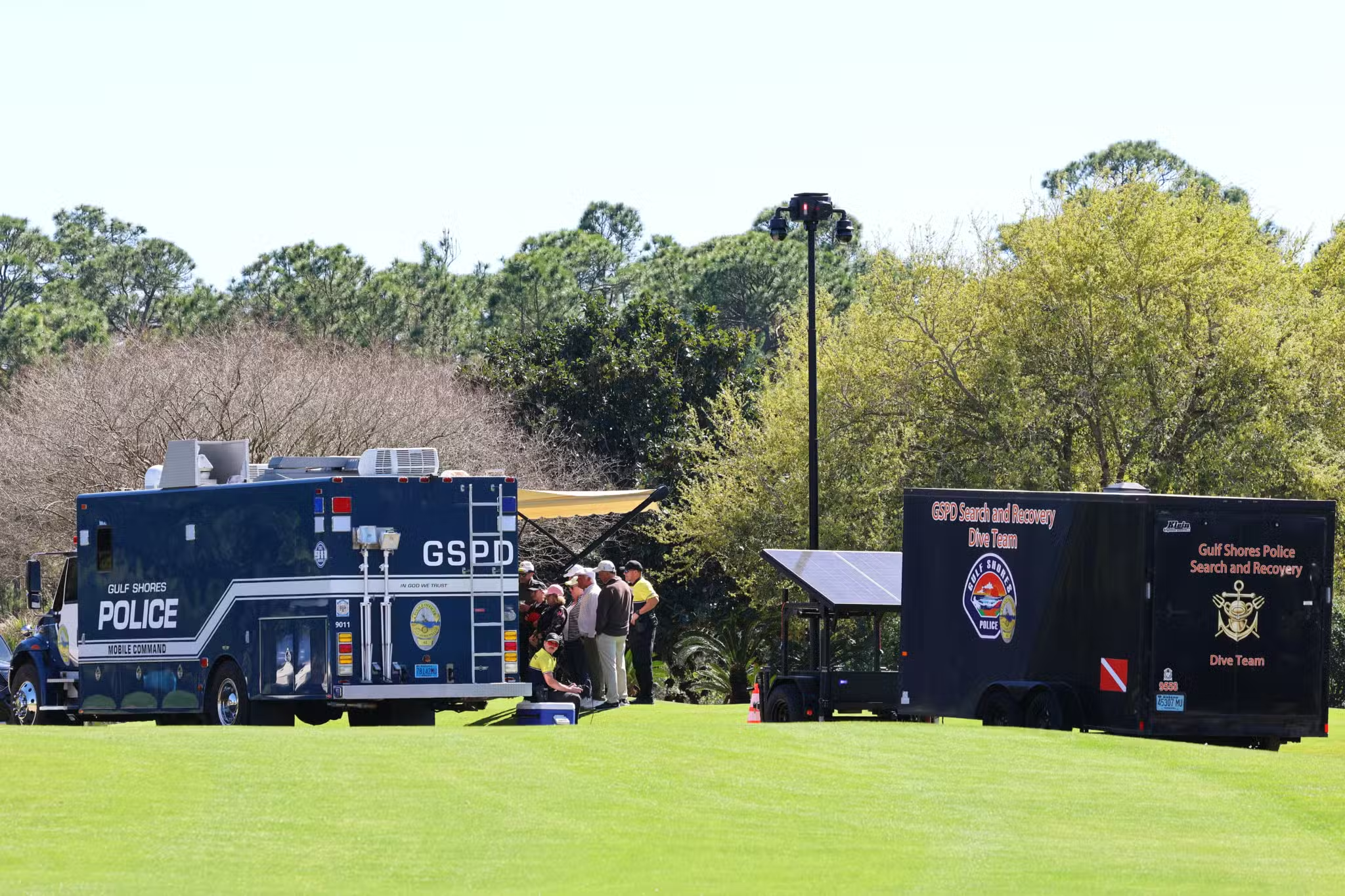
The FXT-44’s elevated mast and dual PTZ cameras provided persistent coverage across the beachfront.
Equipment Deployed
CTS FXT-44 Remote Solar Surveillance Trailer
18-foot fixed mast · Dual Axis Q6325-LE PTZ cameras with 31x zoom, 820′ IR, AV1 codec · 1 TB SD cards per camera · 12 months cloud storage · Starlink Mini at mast height · T-Mobile Priority 5G with high-gain panel antenna · Peplink SpeedFusion bonding · Dual Wi-Fi antennas · 640W articulating solar · LiFePO4 lithium battery bank · Victron remote energy monitoring · Red/blue LED lights · ACS Edge (free) · No NVR required
RATT RQ621 Mobile Surveillance Tower
Field-swappable mast system · Deploys on vehicle hitch, tripod legs, or wall mount · Used at Hangout Music Festival and rooftop surveillance operations · Feeds into same ACS Edge interface as the FXT-44
Why This Deployment Matters
Most agencies buy a surveillance trailer or a mobile surveillance tower. Gulf Shores Police Department operates both. That combination creates a capability that neither system delivers on its own.
The FXT-44 holds a position. It runs on solar, streams to the cloud, and does not need anyone babysitting it. The RATT moves with the mission. Rooftop one day. Patrol vehicle the next. Tripod at a checkpoint the day after that. Both systems use ONVIF-compliant cameras that plug into any VMS or RTCC platform. Both are NDAA/TAA compliant and 100% grant eligible. Both are built by Critical Tech Solutions in Knoxville, Tennessee.
For agencies evaluating a remote surveillance trailer, this deployment answers the question that matters most. Does it produce results in the field? Six firearms seized and 18+ arrests during a single spring break operation. That is the answer.
Frequently Asked Questions
What surveillance trailer did Gulf Shores Police Department deploy?
Gulf Shores Police Department deployed a CTS FXT-44 remote solar surveillance trailer with a custom configuration. Dual Axis Q6325-LE PTZ cameras with 31x optical zoom, 820-foot IR range, and AV1 codec. Connectivity via Starlink Mini and T-Mobile Priority 5G bonded through Peplink SpeedFusion. 1 TB SD cards per camera for edge storage plus 12 months cloud storage included. The trailer runs autonomously on 640W of articulating solar power and LiFePO4 lithium batteries.
What results did the trailer produce during spring break?
Information gathered from the FXT-44’s cameras contributed to multiple arrests and the confiscation of six illegal firearms during the spring break operation. The cameras also gave officers the ability to verify reported incidents in real time before committing resources, which reduced unnecessary responses and improved decision-making under pressure.
Does Gulf Shores Police Department also use The RATT mobile surveillance tower?
Yes. Gulf Shores Police Department operates a RATT RQ621 mobile surveillance tower in addition to the FXT-44 trailer. The RATT has been deployed at the Hangout Music Festival, on rooftops via tripod mount, and on patrol vehicles via hitch mount. Both systems feed into the same ACS Edge cloud interface, giving officers all cameras in one view from any device.
Do the cameras require an NVR or local server?
No. Every camera includes edge storage (1 TB SD card) plus cloud storage accessible from any browser or mobile app. The default VMS is ACS Edge, which is free and cloud-native. There is no NVR box, no camera server, and no laptop required in the field. Officers access live and recorded video from their phone, tablet, or desktop from anywhere with an internet connection.
How does the trailer connect to the internet on a beachfront?
GSPD’s FXT-44 uses a Starlink Mini satellite terminal at mast height combined with T-Mobile Priority 5G through a high-gain panel antenna. A Peplink router with SpeedFusion bonds both connections into a single data pipe. If either link degrades, the other keeps video streaming. This dual-path approach solved the spotty cellular coverage along the Gulf Coast beachfront.
Is the CTS FXT-44 NDAA compliant?
Yes. The FXT-44 and all CTS solar surveillance trailers are fully NDAA/TAA compliant and eligible for federal grant funding. CTS holds a SOCOM sole source contract and is available through TIPS Contract #230105 for government agencies purchasing without competitive bid.
How quickly can an FXT-44 be deployed?
The FXT-44 deploys in 20 to 30 minutes. Tow it to the location, extend the mast, power on the cameras, and the system is live. Solar and battery power mean no generator hookup or electrical infrastructure needed. Once deployed, the trailer operates autonomously for weeks without maintenance visits.
See What Elevated Surveillance Can Do for Your Agency
CTS builds remote solar surveillance trailers and rapid-deploy mast systems for law enforcement, military, and public safety. NDAA/TAA compliant. SOCOM sole source. Built in Knoxville, Tennessee since 2013.